Williamsburg Garage Door Guide
Is Your Williamsburg Garage Door Worth Fixing, or Time to Replace?
Williamsburg homes built between 1948 and 1983 carry original garage door hardware. Here's how to tell if yours still deserves a repair or if it's past that point.
- Licensed & Insured
- Same-Area Service Calls
- Upfront Pricing
What to Look At First
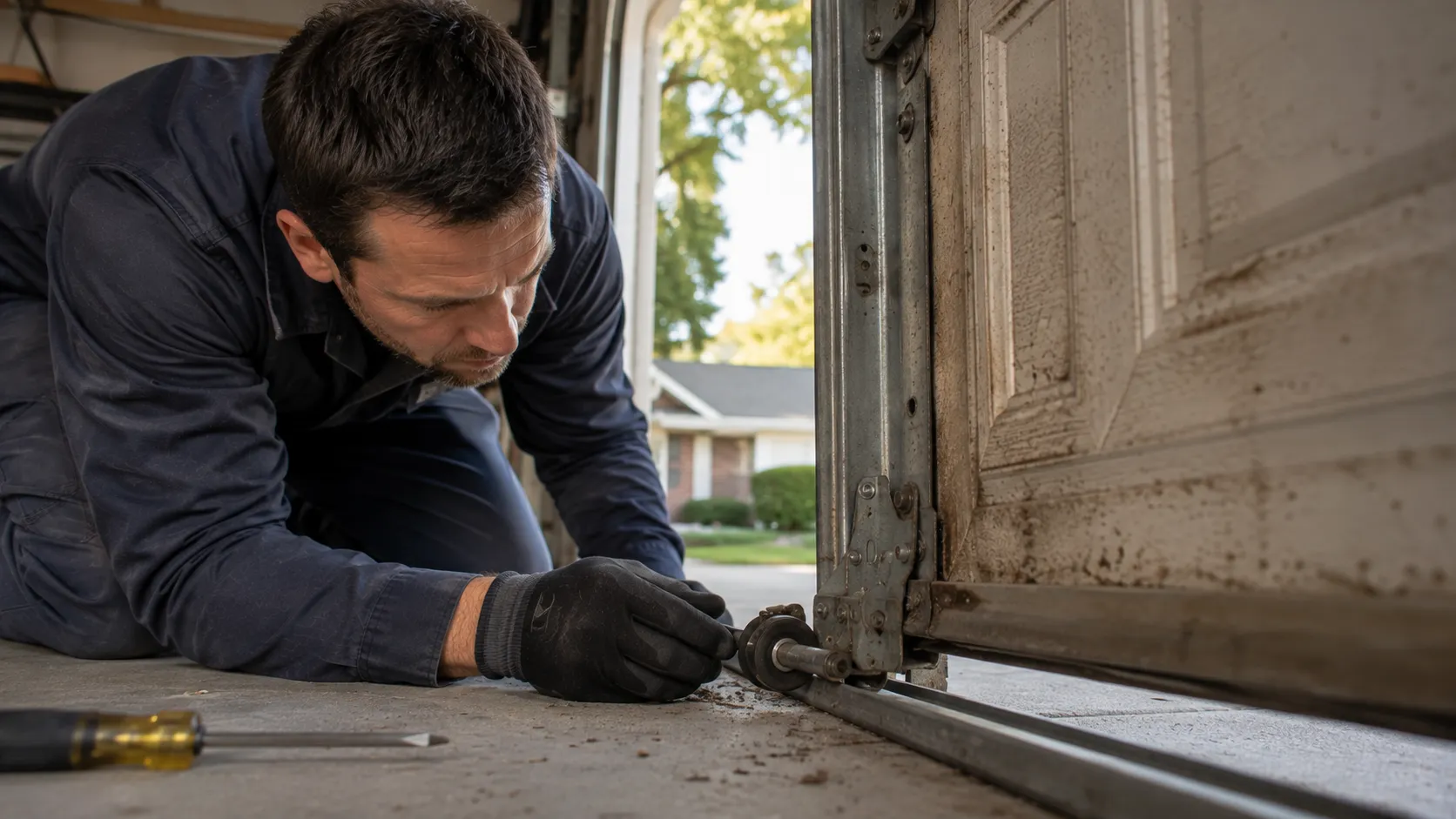
Before you call anyone, look at what you actually have. Most houses in Williamsburg's older neighborhoods went up between 1948 and 1983, with the median build year landing around 1978, and a lot of those doors are still running the hardware they shipped with. Check the spring type first - torsion springs mounted over the header versus a pair of extension springs stretched along the horizontal tracks tells you a lot about the door's age and what parts it needs.
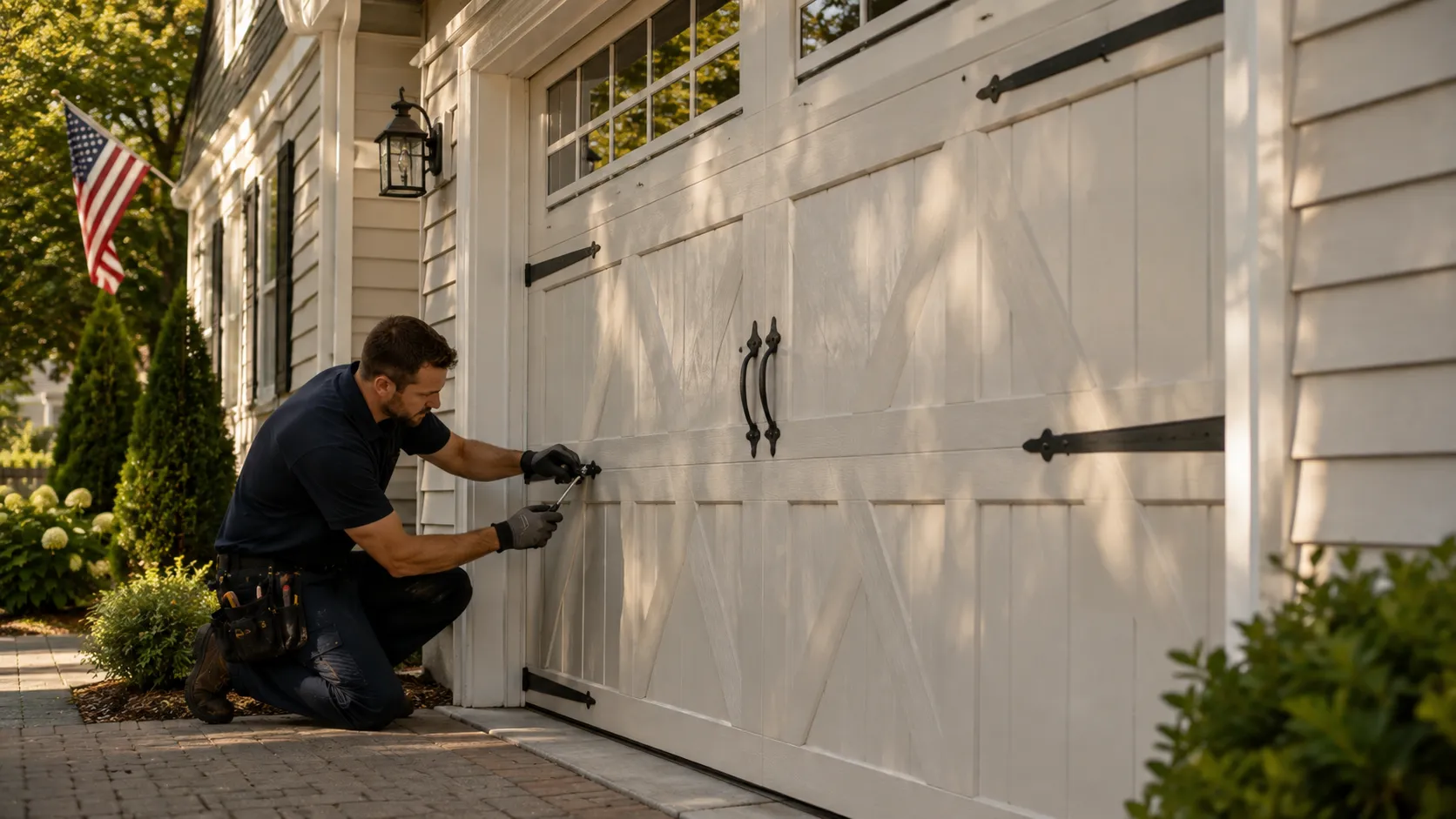
Look at the panels for rust bubbling through the paint at the bottom seam, and run a hand along the track for pitting or bent sections. If the opener is a chain-drive unit with a pull-cord light switch wired into the wall, that's likely original too. None of this means the door is done.
A torsion spring snapping on a 1970s door is a normal repair. A track that's rusted through at the bottom bracket, or a panel that's delaminating from decades of moisture cycling, starts pushing the math toward replacement instead of patch-and-go.
The Problem
The five older sections of Williamsburg are dominated by 1960s and 70s construction, which means original hardware sized for doors that don't match anything on the shelf today. Track widths, drum sizes, and spring wind counts from that era were never fully standardized, so a repair tech either has to special-order a matching part or adapt a modern one to fit an old track - and adapting adds labor and risk. We see this most on the original single-layer steel doors, which were never insulated and were never meant to carry forty-plus years of service.
The panels themselves usually outlast the springs and rollers by a wide margin, so the door looks fine from the driveway while the moving parts underneath are working on borrowed time. That gap between how a door looks and what its hardware can still take is where most bad calls get made - either replacing a door that just needed a spring, or sinking money into a repair on a track that's too far gone to hold alignment.
What Local Conditions Do
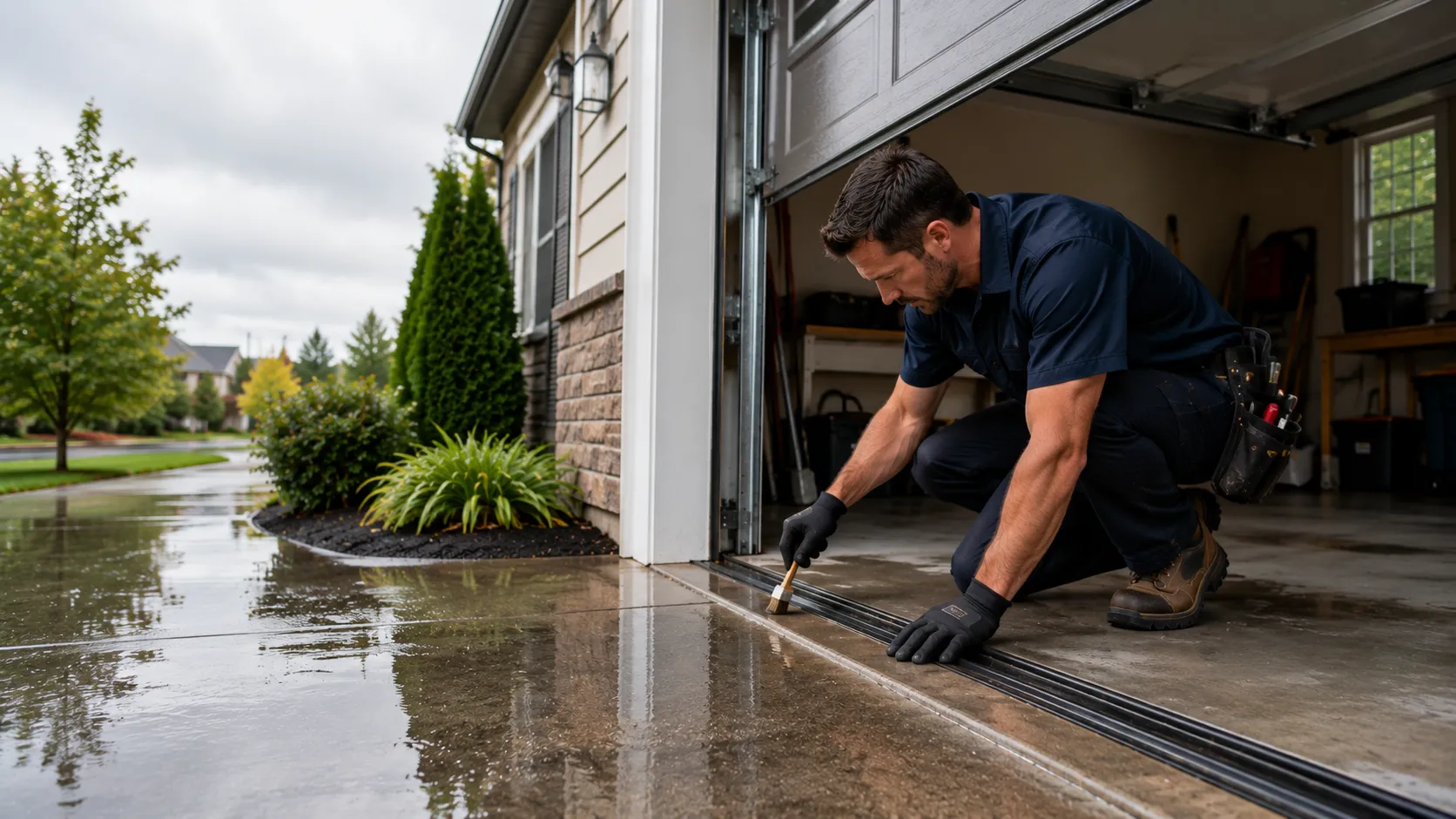
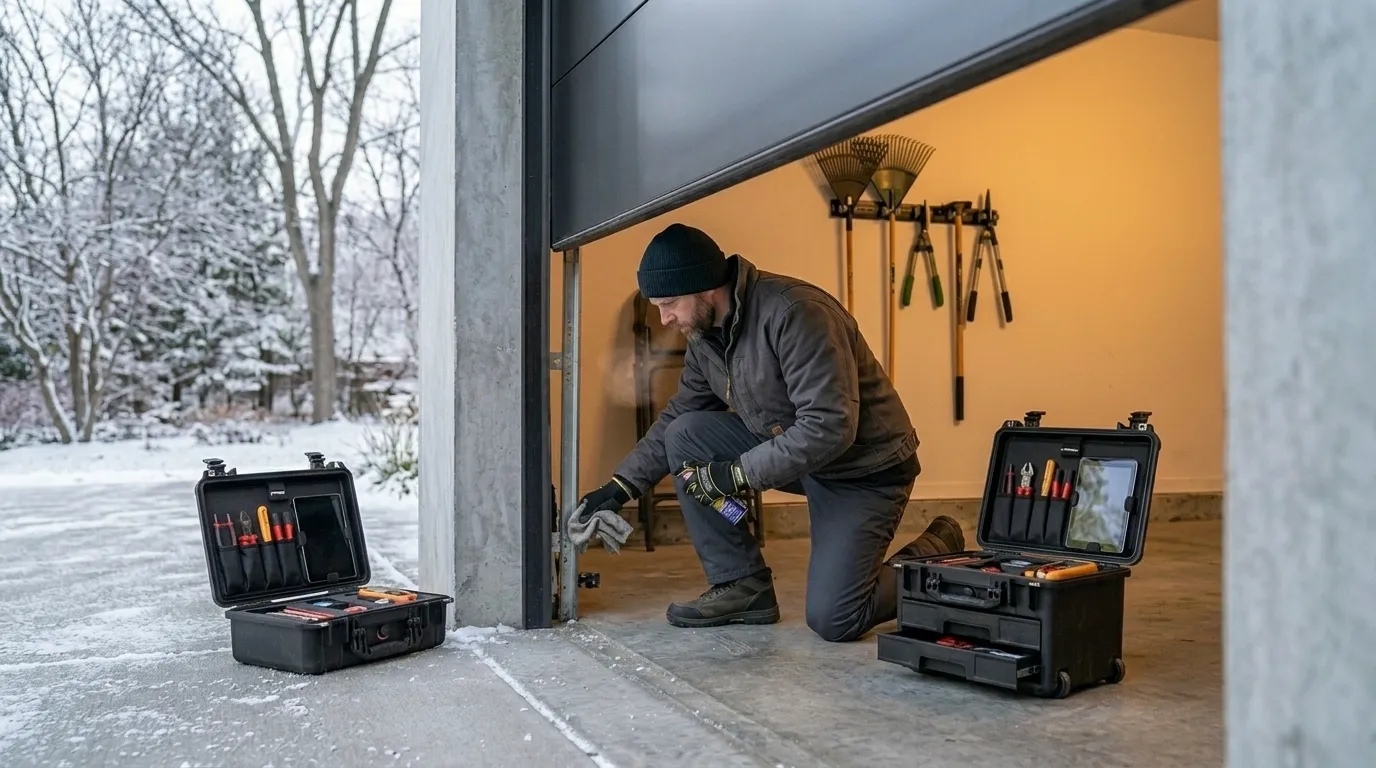
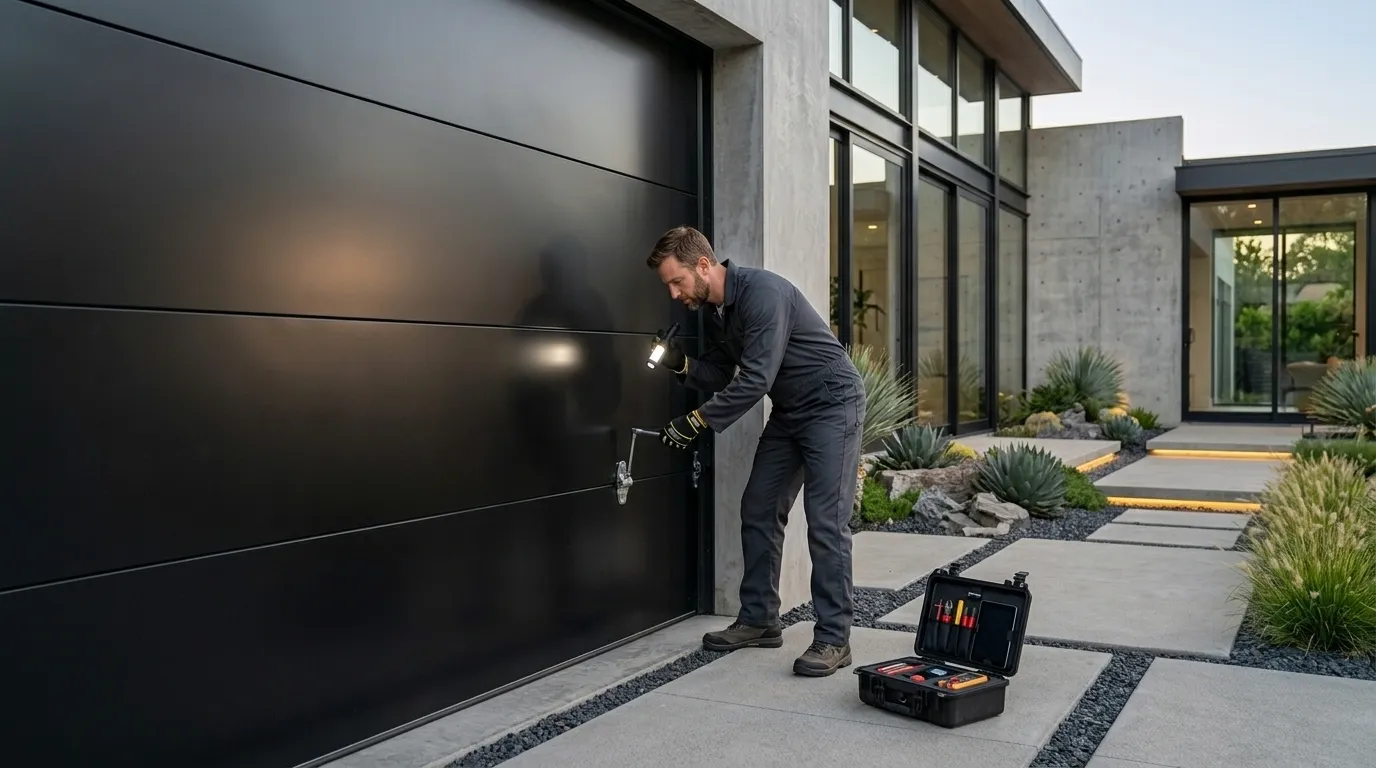
Williamsburg sits in a cold-moderate climate band, so a steel door here fights swings that flex the panel joints twice a year, not once - cold enough in winter to stiffen grease and shrink metal slightly, warm and humid enough in summer to swell wood trim and invite surface rust on unpainted brackets. That cycle is harder on hardware from the 1960s-70s stock than it is on anything built to current weatherstripping standards, because the older doors don't have the same seal tolerances. Condensation on an uninsulated steel panel during a cold snap is normal, not a sign of failure, but it does accelerate rust at the bottom seal track if water sits there.
None of this is dramatic weather - no named storm, no flood event on record here - it's just steady seasonal cycling wearing on decades-old parts a few degrees at a time. A door that's tracked straight and sprung right handles it fine. One that's already out of alignment gets worse faster than it would in a milder or steadier climate.
The Cost of This Job
Across Williamsburg's service area, 3,041 of the 5,281 households own their houses outright, which is the group carrying original torsion setups from the 1970s and deciding, one spring failure at a time, whether to keep repairing or replace. With median household income here at $74,009, most of these calls land on a straightforward repair-versus-replace decision rather than a stretch either way - the numbers usually make sense for fixing a sound door and replacing one that's structurally shot.
We don't have a flat price to quote you here since it depends on what's actually broken, but we can tell you on-site whether a spring, track, or opener repair is worth doing on your specific door before any work starts. Homeowners here reach Yorktown in about 11 miles and Gloucester Point in 12, distances that matter if a shop out that way stocks a part yours doesn't - for a lot of these original doors, sourcing the right-size drum or matching track section is the actual bottleneck, not the labor.
How We Can Help
Garage Door Repair
Springs, cables, tracks, rollers, and openers fixed by a tech who explains the problem before touching anything.
Learn more →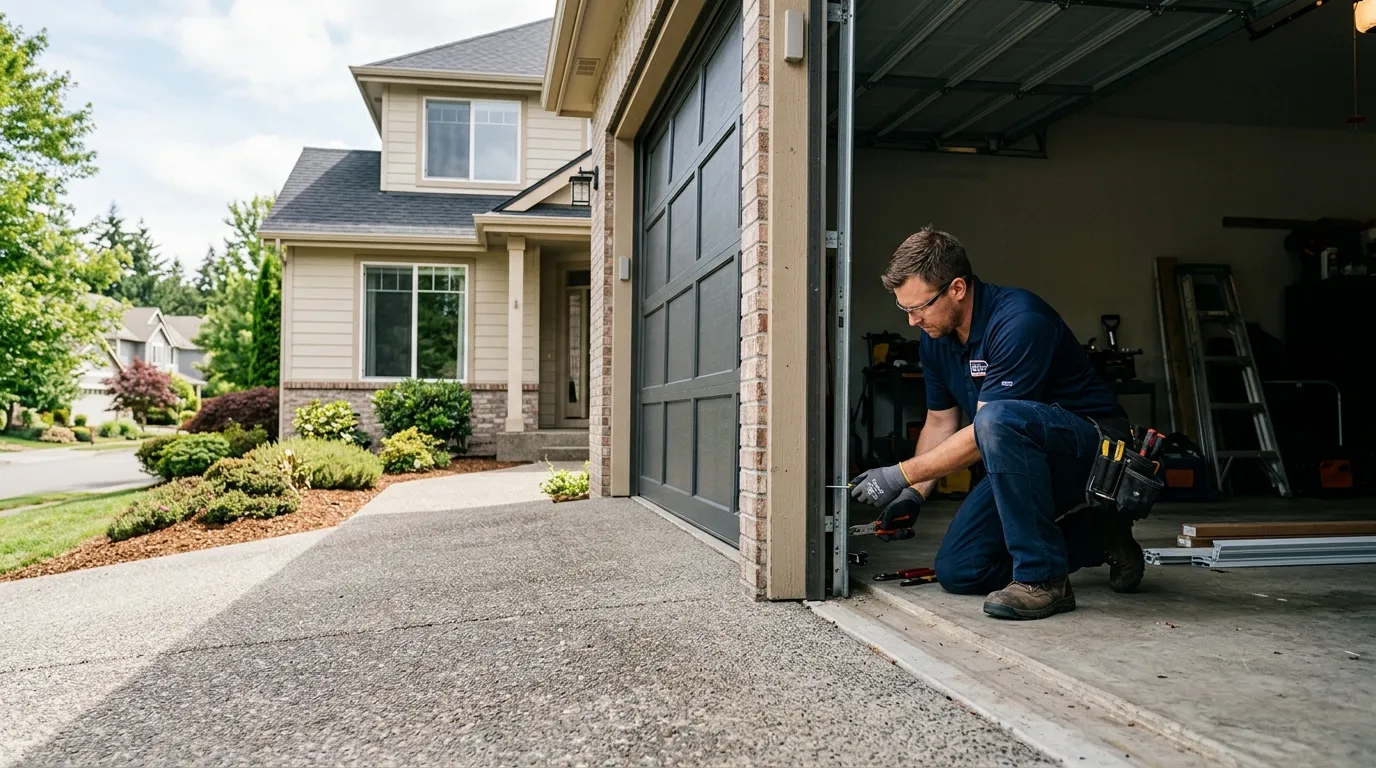
Garage Door Installation
New sectional doors sized and installed for the housing stock actually built in this area.
Learn more →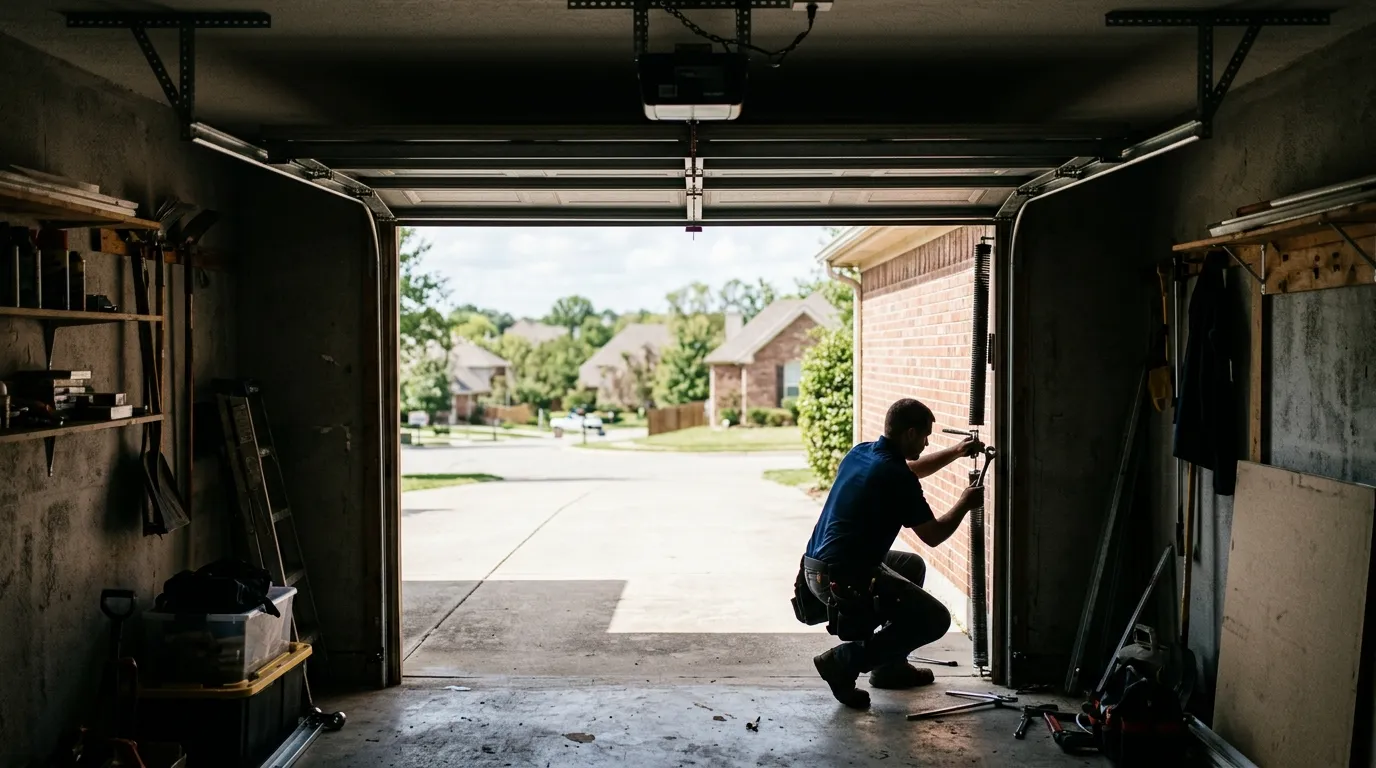
Garage Door Service
Tune-ups, lubrication, and safety checks that catch a small problem before it becomes a service call.
Learn more →Frequently Asked Questions
How do I know if my garage door spring is original to the house?
If your house was built in the 1960s or 70s range common to this area and the spring or hardware has never been replaced, it's likely original. Signs include a chain-drive opener with a pull-cord light, extension springs along the horizontal track instead of torsion springs over the header, and visible rust or scaling on the coil itself.
Is it worth insulating an old steel door instead of replacing it?
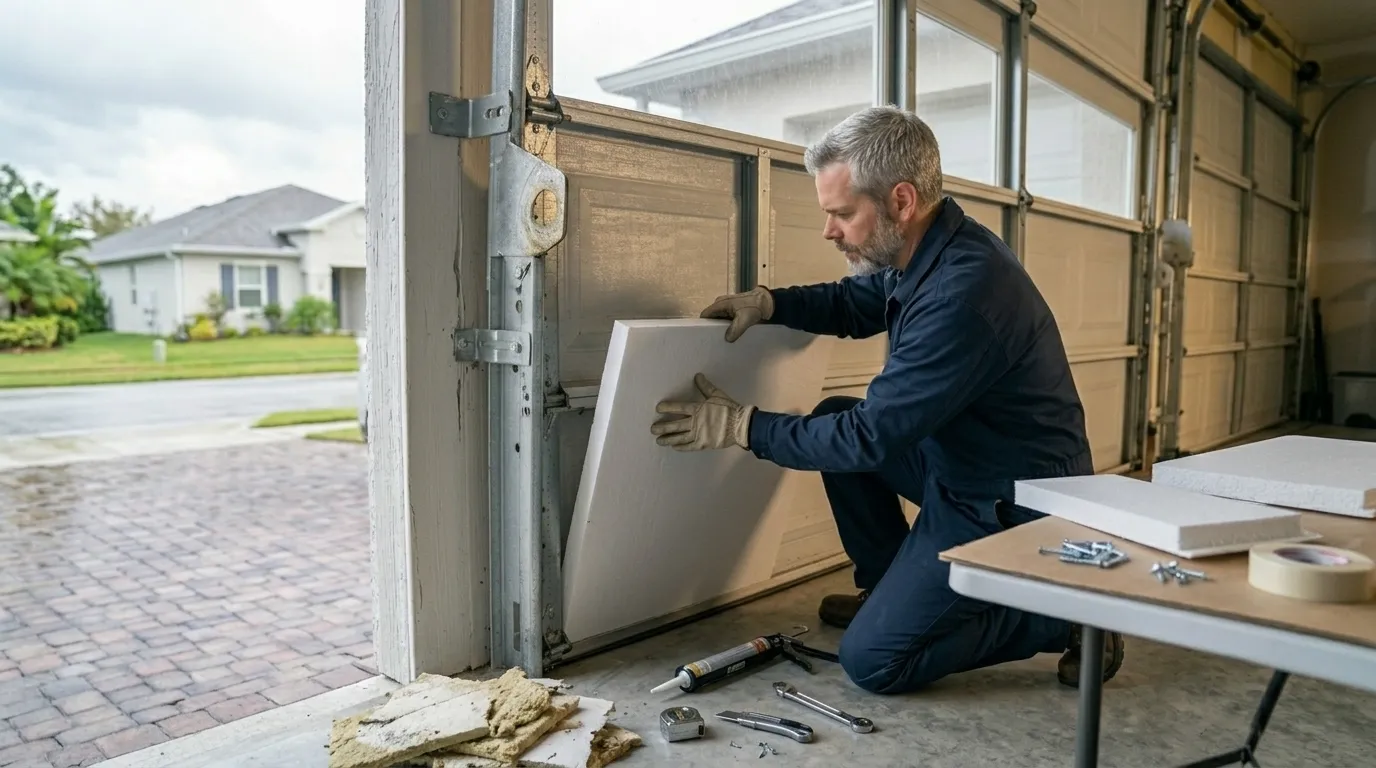
Depends on the panel condition. If the steel is sound and just uninsulated, adding a retrofit insulation kit can help with the cold-moderate swings we get here. If the panels are already rusting through or delaminating, insulating them doesn't fix the underlying structural problem.
Why can't I get a straight price without someone coming out?
Because the fix depends on what's actually failed - a spring, a track, a broken cable, or the opener - and on houses this old, matching hardware sometimes means sourcing an older part size. We'd rather look at it than quote blind.
My door still opens fine - why would I need to replace it?
A door can look and operate fine while the track or spring is close to failing, especially on 1960s-70s stock that's been cycling through cold winters and humid summers for decades. If the hardware's original and hasn't been inspected in years, it's worth a look before it fails on its own.
Have a Door That Needs a Second Opinion?
Call and describe what it is doing - we will tell you what it likely is.