Service
Replacing an Old Garage Door in Williamsburg
Most Williamsburg homes date to 1948-1983, and original garage door hardware is past its life. See what installation involves here, and what it costs.
- Licensed & Insured
- Same-Area Service Calls
- Upfront Pricing
What You Are Seeing
You're looking at a door that doesn't sit flush at the bottom anymore, or one where the opener strains and groans halfway up. Maybe the panels have started to bow, or the weatherstrip along the bottom edge has cracked and let daylight through in a thin line. Sometimes it's simpler than that: the door just looks tired next to the rest of the house, dented from decades of use, painted over more than once.
A lot of these are the original door that came with the house. If yours dates back to the build, you're not dealing with a broken part so much as a door that's finished doing its job. Springs stretch and lose tension over years of cycles.
Steel skins thin out at the stress points around the rollers. Tracks that were installed true in 1972 aren't necessarily true now, especially if the slab has settled even a little.
If you're seeing rust bleeding through the paint, or the door slams the last foot instead of settling, that's usually cable or spring wear talking, not something you fix by tightening a bolt. Installation, not patch repair, is the right call once the door itself - not just one part on it - has aged out.
Why It Happens Here
Housing in this area mostly went up between 1948 and 1983, with the median build year landing around 1978 and most of the stock concentrated in the 1960s and '70s across the five main residential areas here. That means a huge share of garage doors in use today are the same builder-grade steel panel and single-torsion-spring setup that shipped standard with houses of that era - not upgraded, not insulated, just original.
The climate does the rest of the work. This area sits in a cold-moderate band, which means real winter cold snaps and real summer heat, cycling on the same door twice a year, every year, for fifty-plus years in some cases. Steel expands and contracts with that swing.
Seals harden and crack. Springs that were correctly sized for a lighter, single-layer door in 1975 start to feel undersized once the door has racked slightly out of square from decades of temperature movement.
None of this is a manufacturing defect. It's just what happens to a mechanical assembly that's outlived the building code and construction standards it was built under. A door built for a 1970s garage opening, on 1970s hardware, wasn't specified for another fifty years of daily cycling - and in a lot of houses here, that's exactly what it's gotten.
What the Fix Involves
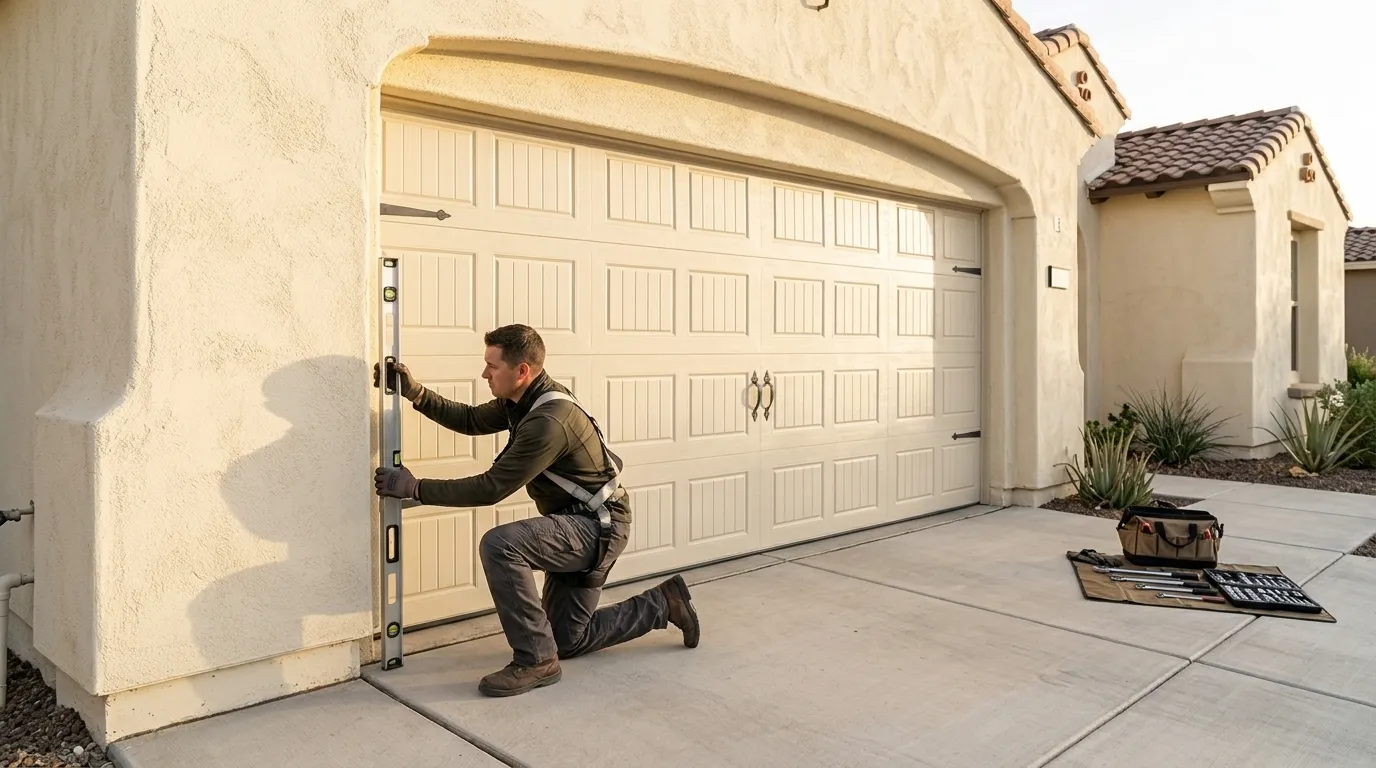
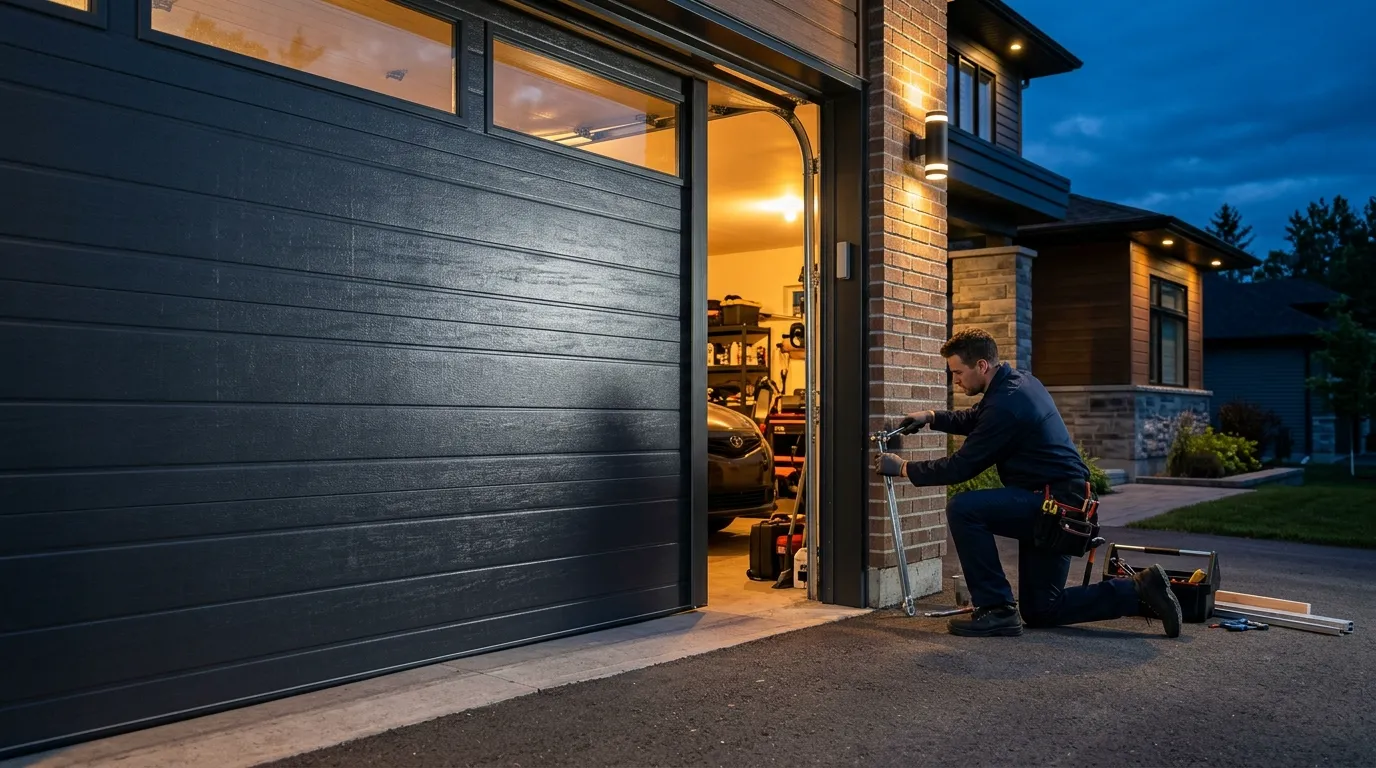
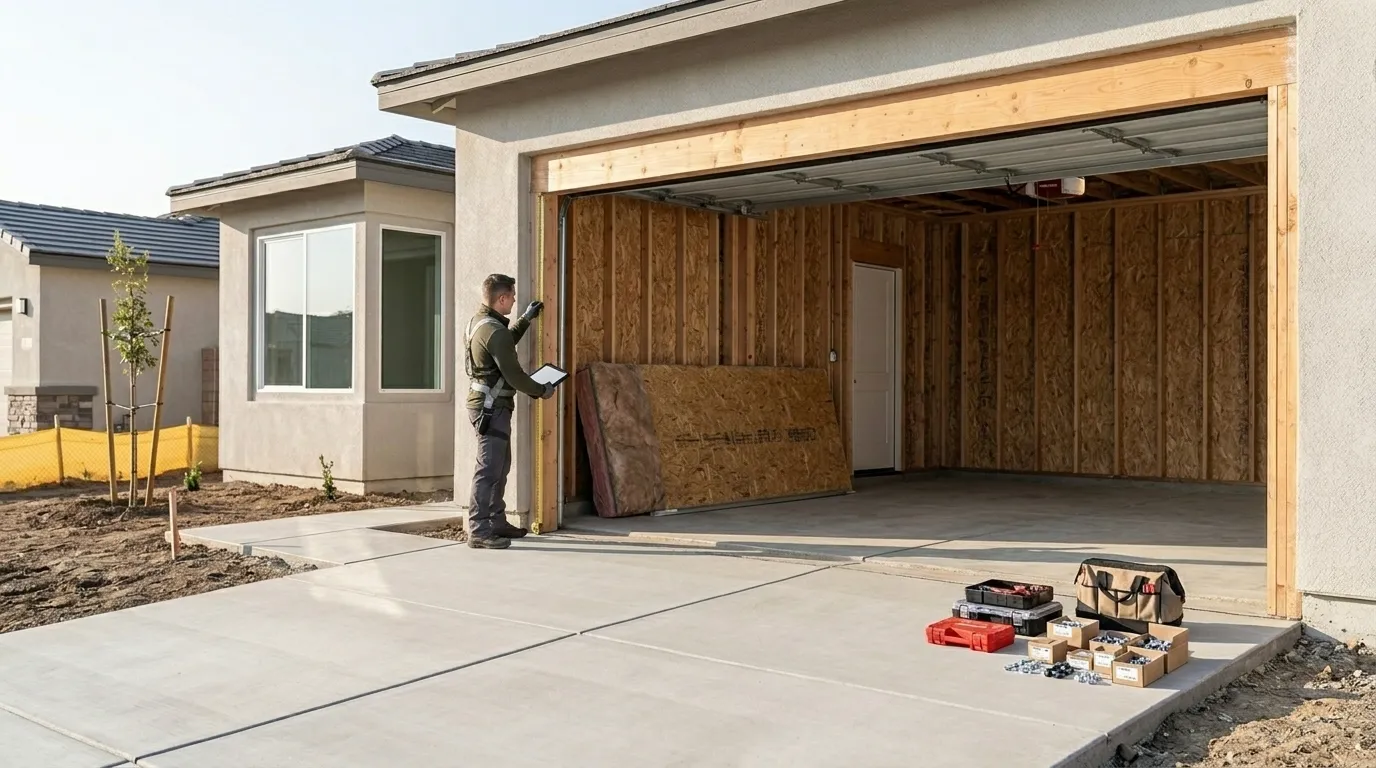
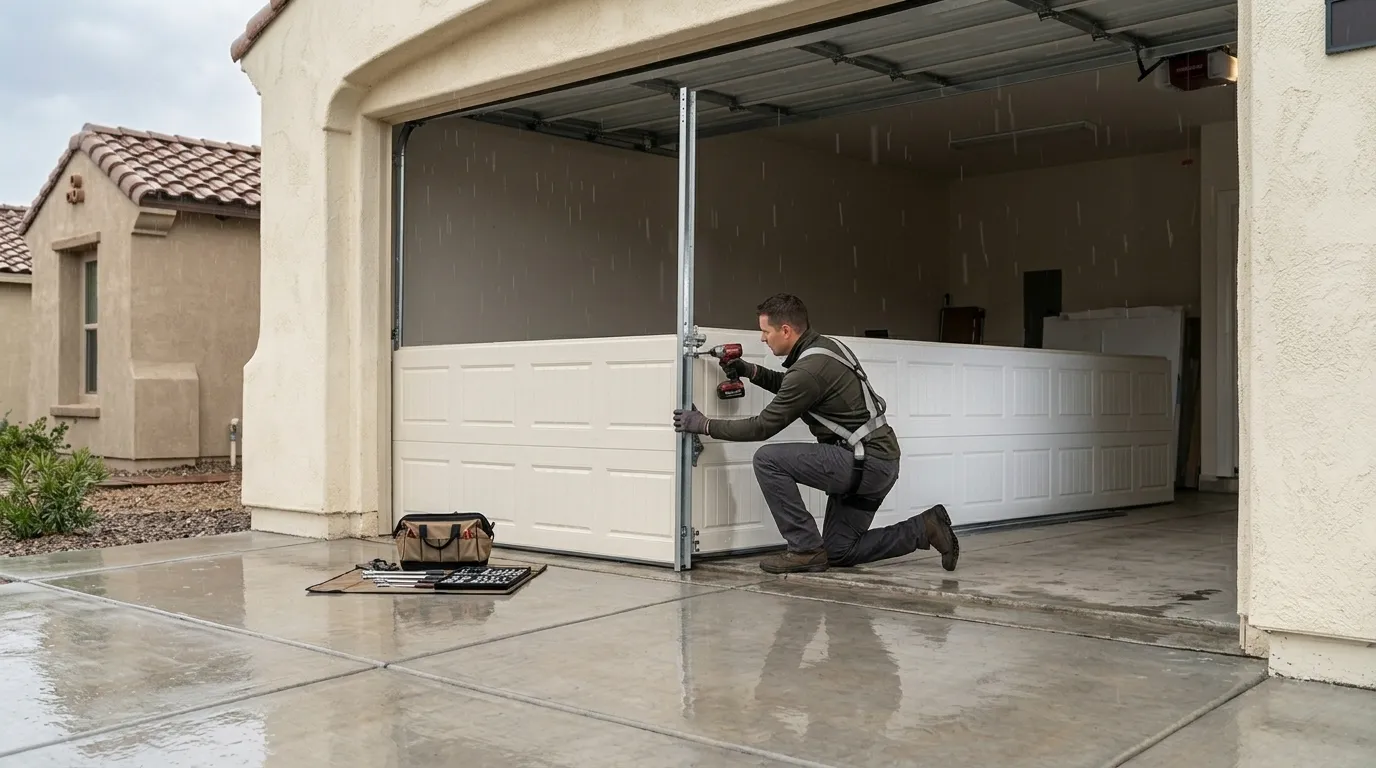
A proper installation starts with measuring the actual opening, not assuming it matches a standard size - older framing here has settled and shifted enough over the decades that plenty of openings are off by a fraction of an inch from spec. That measurement decides jamb, track, and spring sizing, and getting it wrong is how you end up with a door that binds or won't seal.
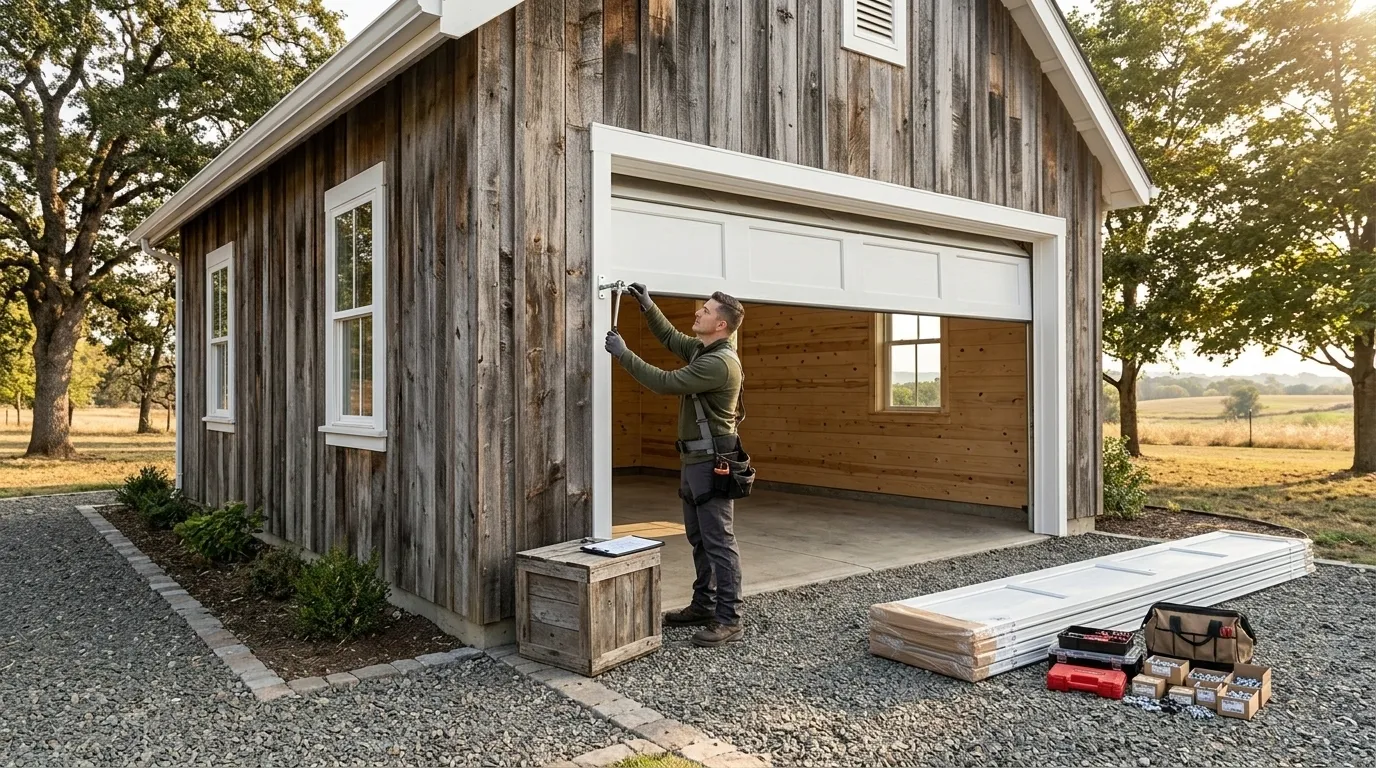
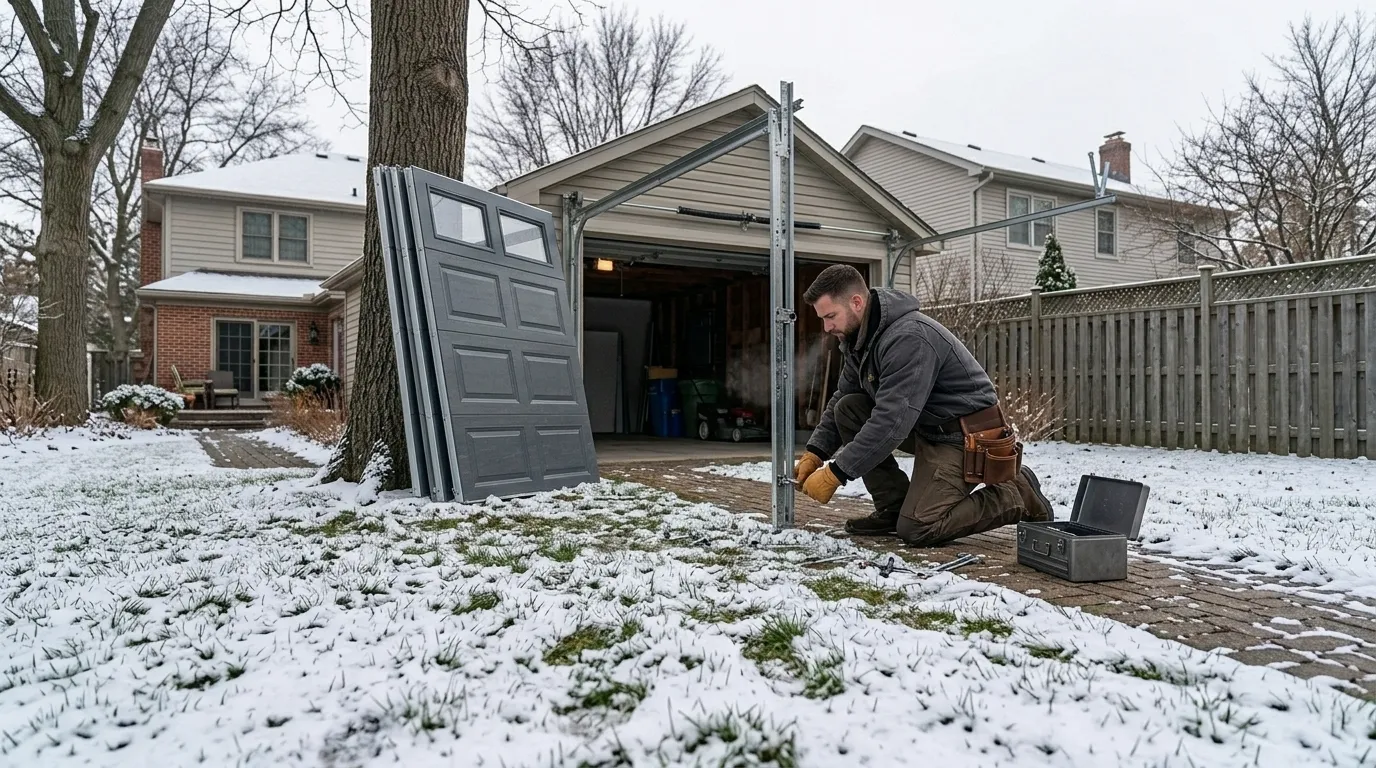
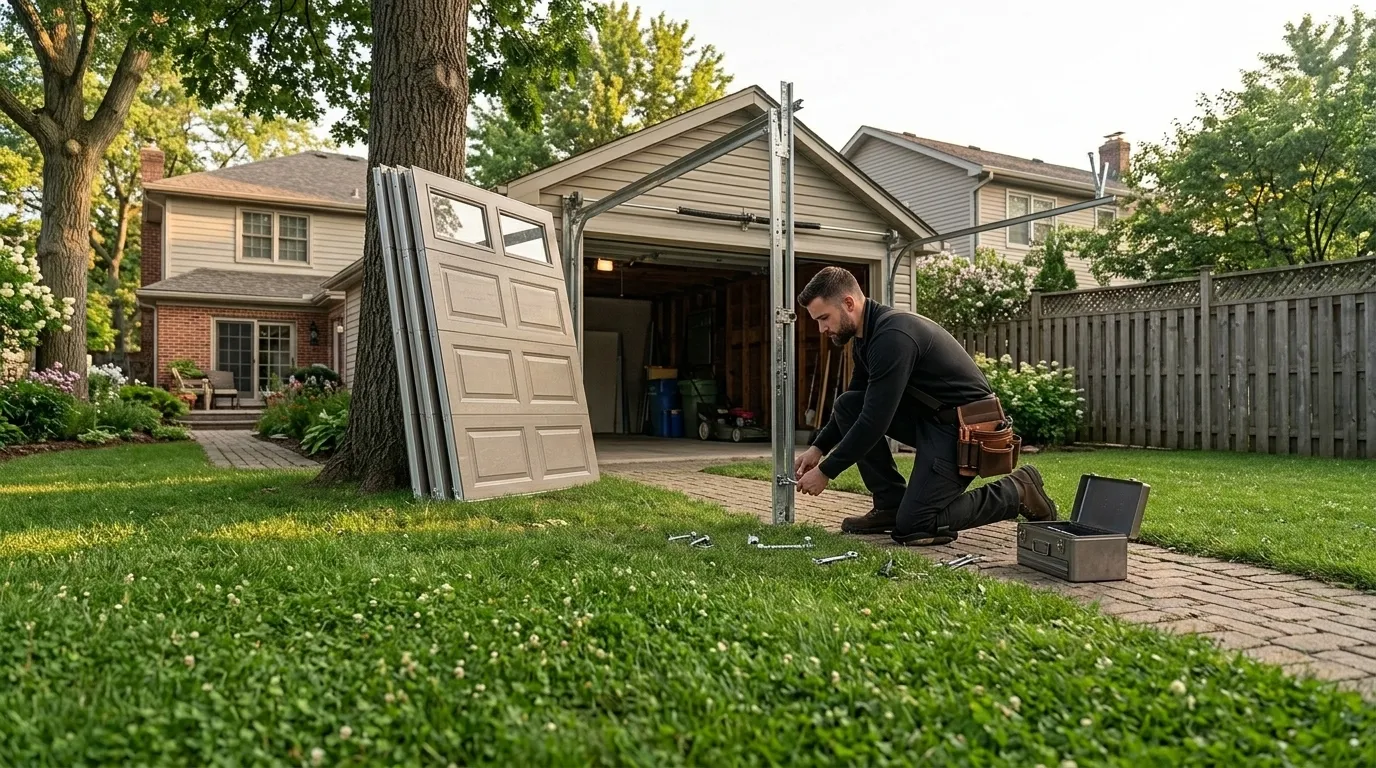
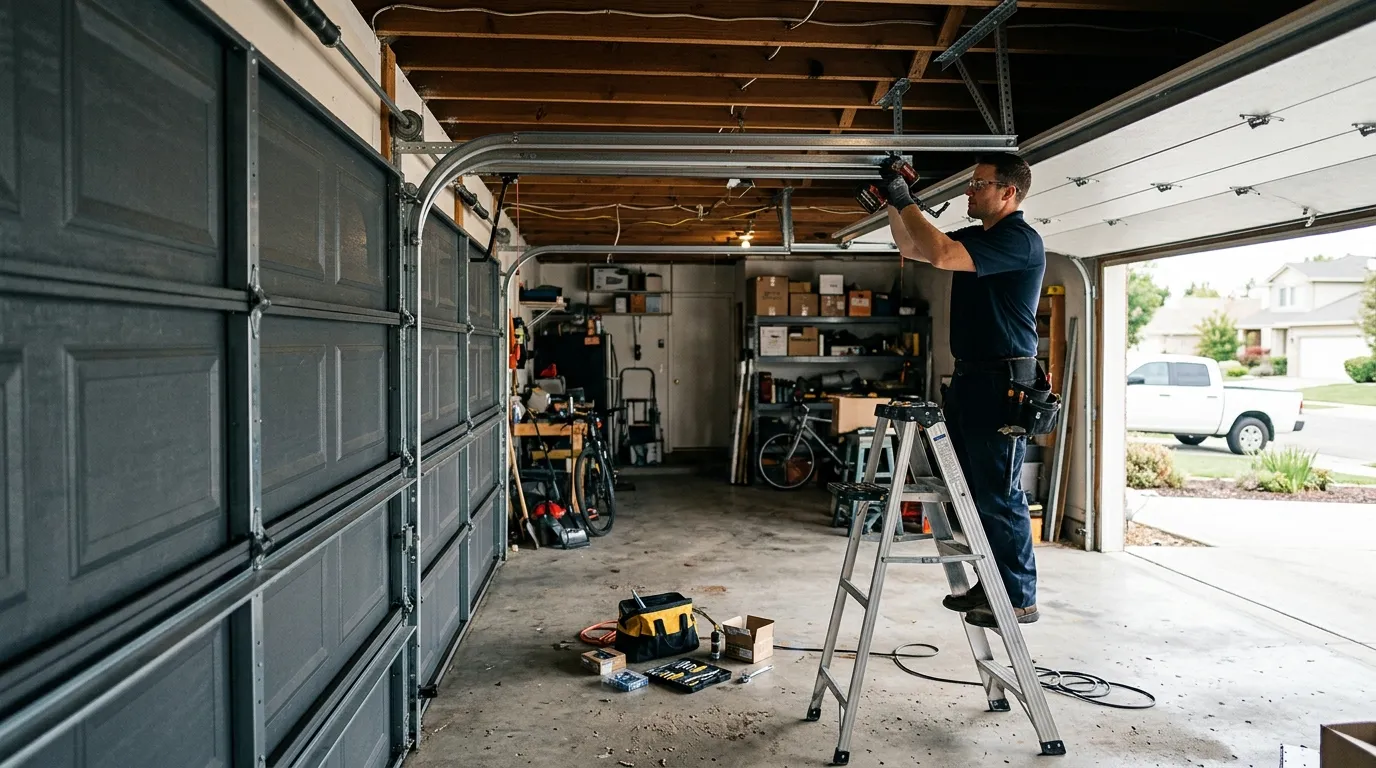
From there, the old door, track, and springs come out as one job, not piecemeal - mixing a new door onto old, fatigued track hardware is how you end up back at square one in a year. The new torsion spring gets sized to the actual door weight, which matters more if you're stepping up to an insulated panel, since insulated steel doors run heavier than the single-layer doors most houses here were originally built with.
Weatherstripping along the bottom and sides gets set fresh, which matters in a climate that swings between real cold and real heat - a poorly seated seal here is a bigger problem than it would be somewhere with a milder year-round temperature band. Opener compatibility gets checked too; a lot of original openers won't safely run a heavier insulated door without an upgrade.
One honest limit: if the framing around the opening has shifted enough to be genuinely out of square, that's carpentry work before it's a door job, and we'll tell you that up front rather than force a door into an opening that won't hold it right.
The Cost of This Job
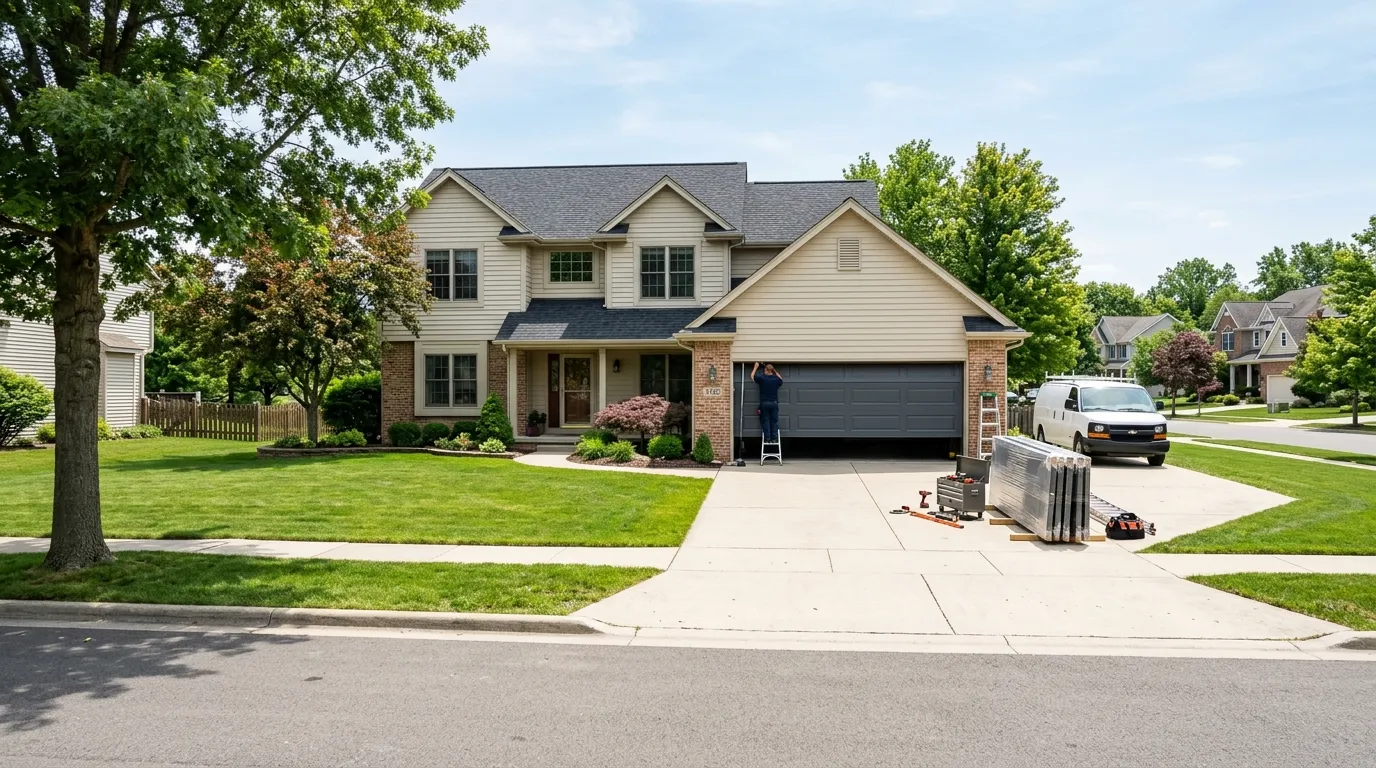
We don't have a set number to hand you here, and any page that gives you one without seeing your opening, your framing, and your current hardware is guessing. What we can tell you is what moves the number: door material and insulation level, whether the opener needs replacing alongside the door, and whether the existing track and jamb hardware can be reused or need to come out too.
With a median household income around $74,009 across this service area, most homeowners we talk to are budgeting for this the way they'd budget for a roof or a water heater - a real expense, not a small one, and worth getting a straight number for before committing. Insulated doors cost more up front than single-layer steel but handle the area's cold-moderate winters better over time.
The honest trade-off: if your existing door is original to a 1960s or '70s build and still structurally sound, a repair - new spring, new rollers, resealed bottom - can be the cheaper and entirely reasonable move. Full installation makes sense once the door itself, not just one part, has reached the end of its run. We'll tell you which situation you're in before we quote anything.
Why Williamsburg Calls Us
What Happens When You Call
Call or Request a Quote
Tell us what the door is doing and roughly how old the house is - that alone points us toward the likely part before a truck leaves.
On-Site Diagnosis
A tech checks the spring, cables, tracks, and opener in person and tells you plainly what is actually wrong.
Straight Price, No Surprises
You get a number before any work starts. It covers parts and labor, nothing added after the fact.
Fixed the Same Visit
Most repairs are done in one trip. If a part needs sourcing, we tell you that upfront instead of guessing.
Talk to a Technician Before You Book
Describe what the door is doing and get a straight answer on what it likely needs.
Jobs Like Yours
Recent work from this service line.
Other Ways We Can Help
Frequently Asked Questions
How do I know if my door needs full installation instead of a repair?
If the door itself is original to the house - meaning it's a 1960s or '70s single-layer steel panel - and you're seeing warping, thinning steel, or a track that won't hold alignment, that's a door problem, not a part problem. A door with one bad part but a sound panel and frame is usually still worth repairing instead.
Does the age of my house affect what door I need?
Yes. Houses here built between 1948 and 1983 mostly have openings and jamb hardware sized to standards from that era, so we measure rather than assume. Framing can also have shifted slightly over decades, which affects how the new door and track get set.
Will an insulated door make a real difference here?
This area sits in a cold-moderate climate band, so an insulated door holds up better against the seasonal temperature swing than the single-layer steel most older houses here were originally built with. It also puts more weight on the opener and springs, which need to be sized for it.
Do you cover areas outside Williamsburg itself?
We serve the surrounding area, including Yorktown, Hayes, and Gloucester Point at around 11 to 12 miles out, and Surry, Rushmere, and Claremont a bit further at 11 to 14 miles. Distance can affect same-day scheduling.
Need Replacing an Old Garage Door in Williamsburg?
Call now for straight answers on cost and timing.