
New Door Installation in Yorktown
Garage Door Installation for Yorktown's 1967-Era Homes
Homes in Yorktown built around 1967 carry steel or wood panel garage doors. We install modern replacements here, traveling 11 miles out from our Williamsburg shop.
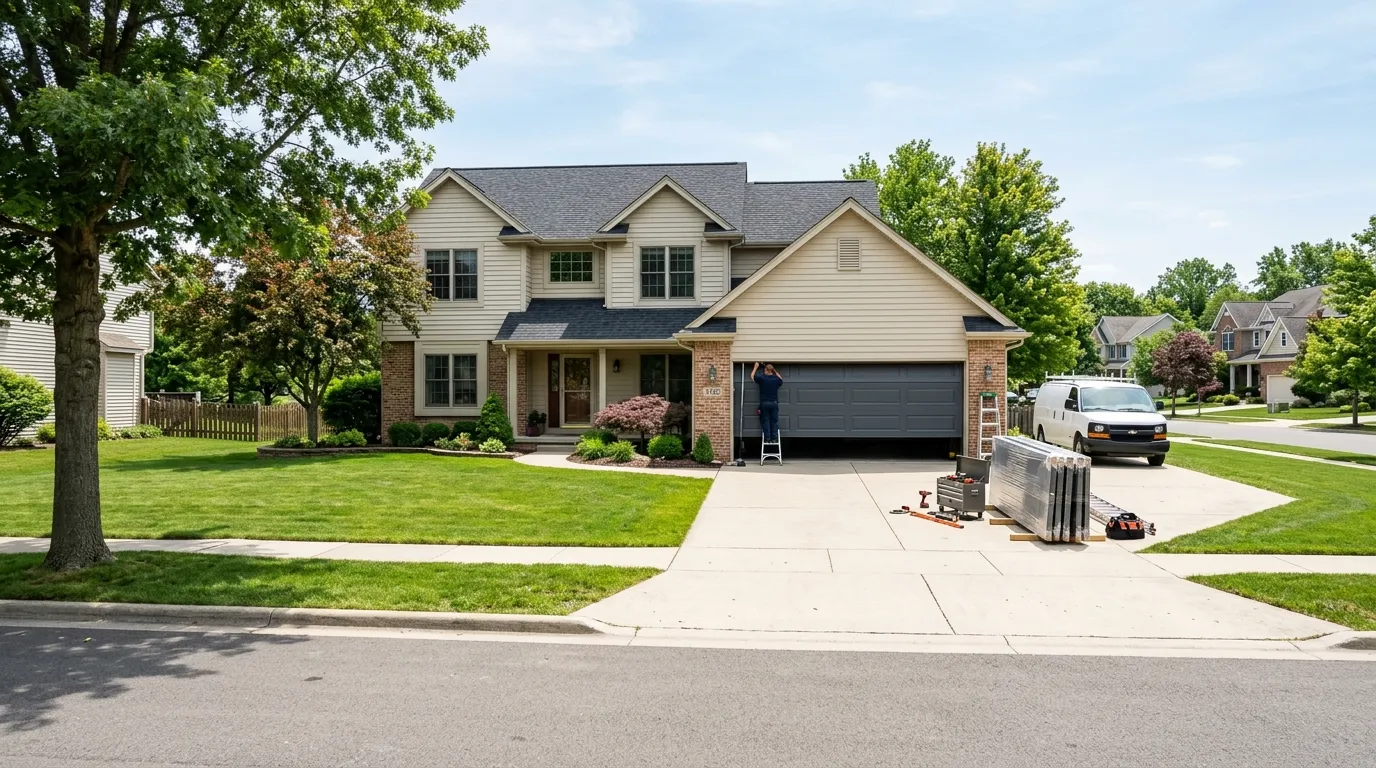
What Happens When You Call
-
1
Call or Request a Quote
Tell us what the door is doing and roughly how old the house is - that alone points us toward the likely part before a truck leaves.
-
2
On-Site Diagnosis
A tech checks the spring, cables, tracks, and opener in person and tells you plainly what is actually wrong.
-
3
Straight Price, No Surprises
You get a number before any work starts. It covers parts and labor, nothing added after the fact.
-
4
Fixed the Same Visit
Most repairs are done in one trip. If a part needs sourcing, we tell you that upfront instead of guessing.
Can You Do This Yourself
A door built for a house from 1967 is not always the same size as what a home center sells off the shelf today. Openings on houses from that period were framed to whatever the builder's supplier had that year, and the jamb width or headroom clearance can be an inch or two off from a current standard 9-by-7 or 16-by-7 unit. That mismatch is the part DIY installers run into after they've already bought the door.
Beyond fit, a garage door section this size, especially a double, is under real spring tension once it's hung. A torsion spring wound to lift a couple hundred pounds of steel or wood panel will put someone in the ER if the winding bars slip. We're not going to pretend this is a weekend job with a ladder and a socket set.
If you're comfortable swapping a broken roller or tightening hardware, fine. Hanging the door itself, setting the springs, and squaring the track is where we'd tell you to call instead of push through it. That's the honest limit: some of this you can do, the spring and the header work you shouldn't.
Why It Happens Here
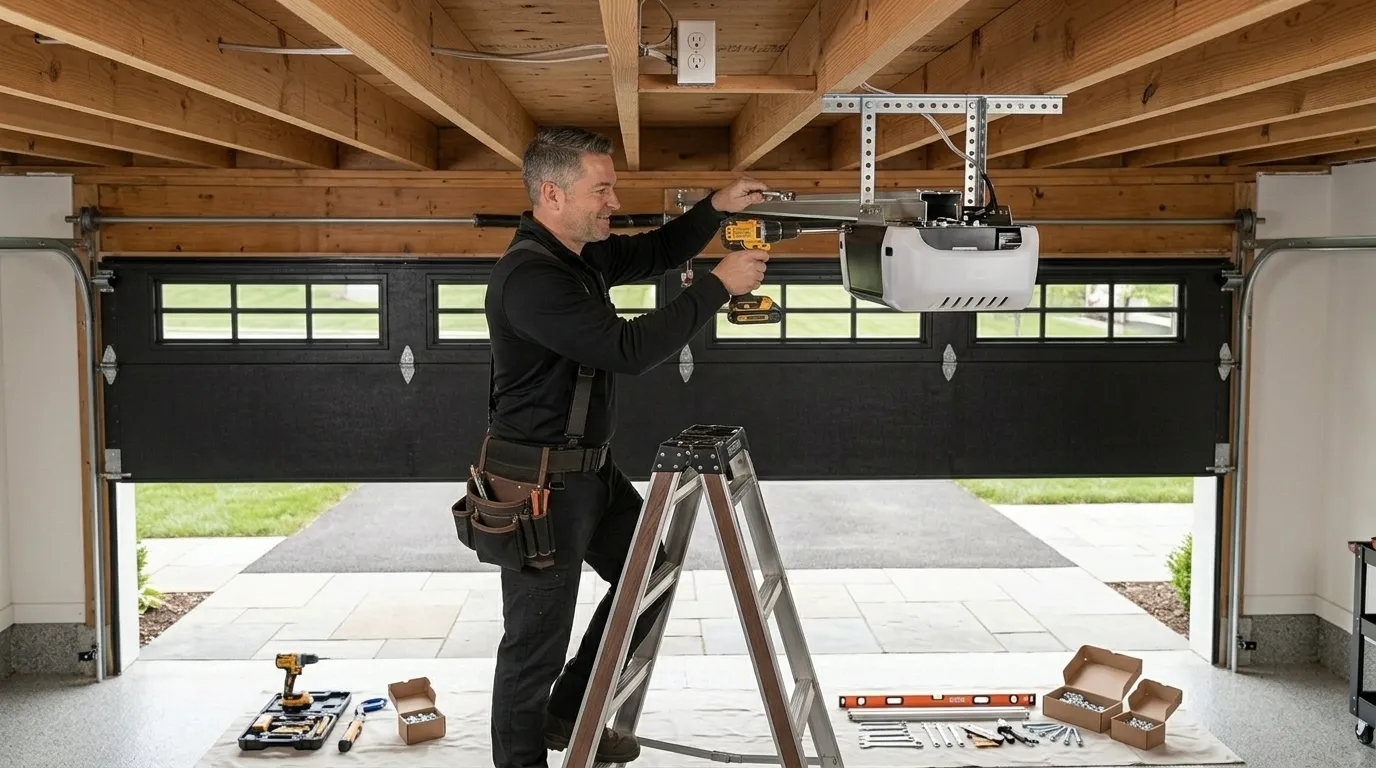
Housing in this part of the service area went up mostly between 1948 and 1983, with the median landing around 1978 - but the Yorktown side skews a bit older, with a typical house here dated closer to 1967. That decade of construction favored steel doors without much insulation backing, or solid wood panel doors on side-mounted torsion hardware, both built for a climate that this area still sits in: a cold-moderate band with real freeze-thaw cycling through winter.
That cycling is what ages these doors out. A steel panel with no thermal break contracts and expands at the seams every cold snap, and over fifty-plus years the seams loosen, the bottom seal hardens, and the panel bows slightly where the reinforcement strut used to hold it flat.
Wood doors from the same era check and swell at the stiles for the same reason. None of this is dramatic - it's just what happens to a door that has outlasted the house's second or third owner.
The Complications
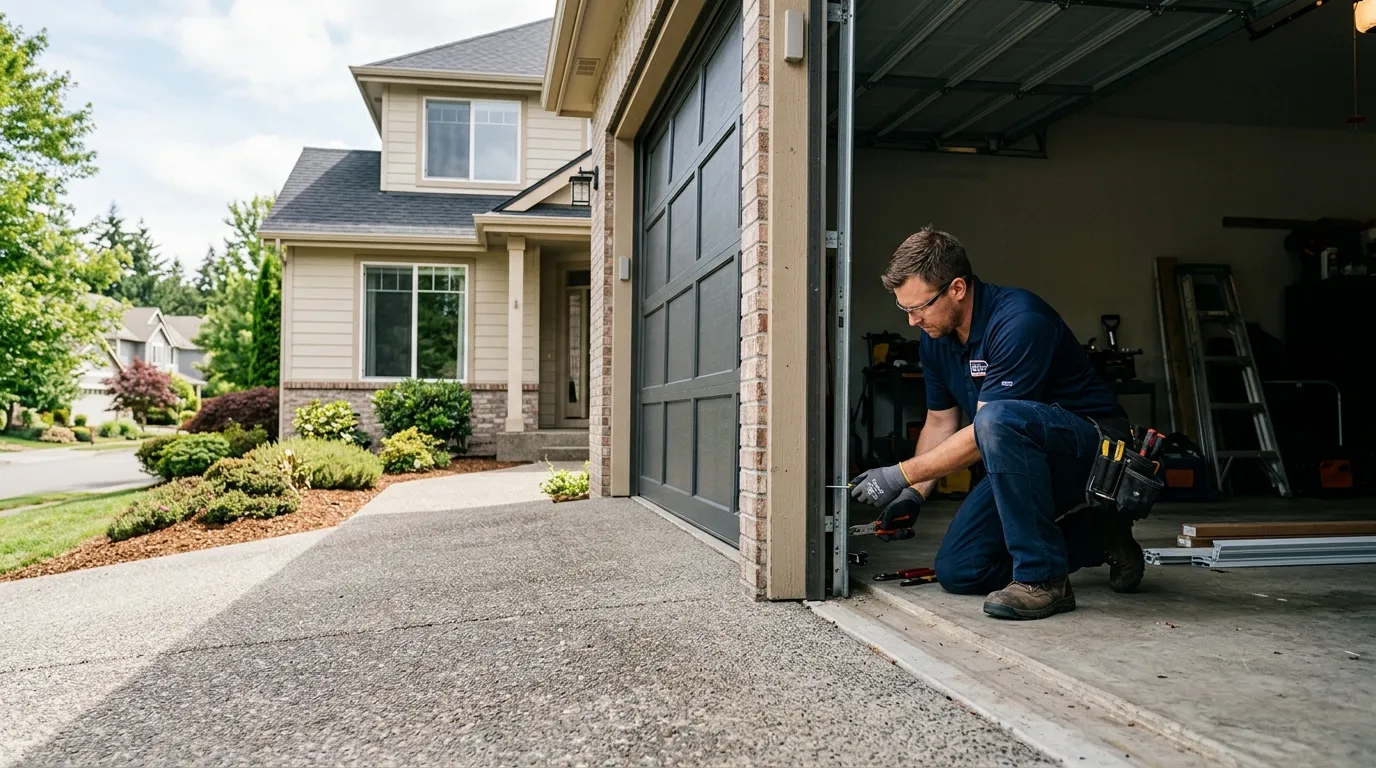
The households on this side of the service area number in the low hundreds - Yorktown itself accounts for about 98 of them - which means the local supply of matched parts for a 1967-era opening is thin. A track bracket or a specific spring wind that a big-box store stocks for a modern door isn't necessarily what a house built that year needs, and ordering a size to match an original jamb can mean a short wait rather than a same-day swap.
The opening itself can complicate things too. Houses from this build era weren't always framed square by today's tolerances, and a track that was shimmed once to compensate can hide a bowed jamb until a new door goes in and won't seal evenly.
We check for that before we quote, not after we've hung the door. It's a slower first visit, but it avoids a callback.
Booking a Visit
We run out of Williamsburg, about 11 miles from Yorktown, so there's no local branch here - just a scheduled visit from a crew that already knows what a 1967-era opening usually needs before they get there. When you call, tell us the rough age of the house and whether the door is steel, wood, or something you're not sure of; that alone lets us bring the right spring wind and track hardware on the first trip instead of a second one.
We'll ask for the width and height off the opening if you have it, but we measure again on site regardless - old openings settle unevenly over five decades, and a tape measure from ten years ago isn't reliable. Visits get booked around the drive time from Williamsburg, so give us a day or two of flexibility rather than expecting same-day service.
What Is on the Truck
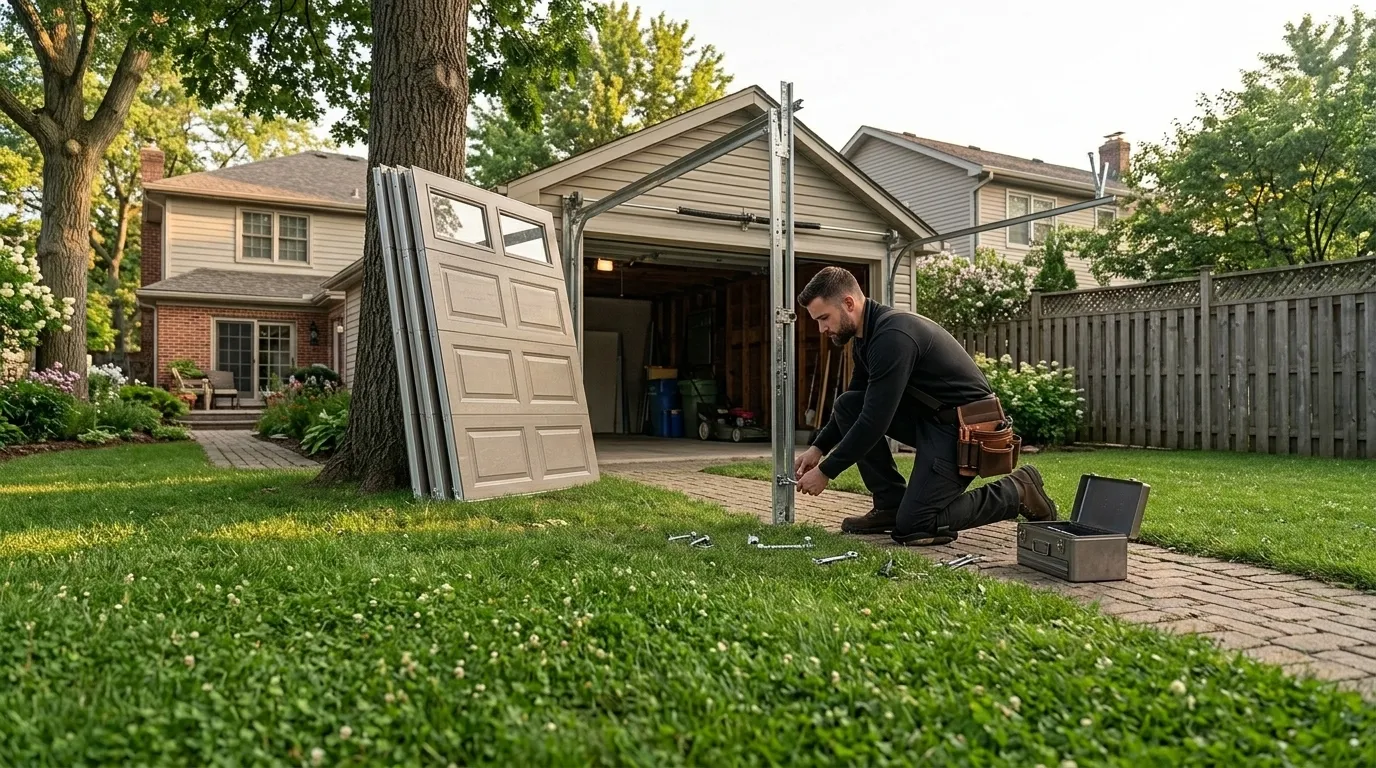
For a standard single or double opening sized to what most 1967-era Yorktown houses actually have, we carry insulated steel replacement doors in the common widths, matched torsion springs rated for that door weight, new nylon rollers, and galvanized track sections built for the cold-moderate climate this area sits in - meaning weatherstripping rated to hold up through repeated freeze-thaw rather than just a mild-winter spec.
What we don't carry pre-stocked is a custom width for a jamb that was framed outside the standard sizes - that's the one honest gap. If your opening measures out non-standard, which isn't rare on a house this old, we order it rather than force a fit, and that adds lead time before install day. We'd rather tell you that up front than hang a door that binds in the track six months later.
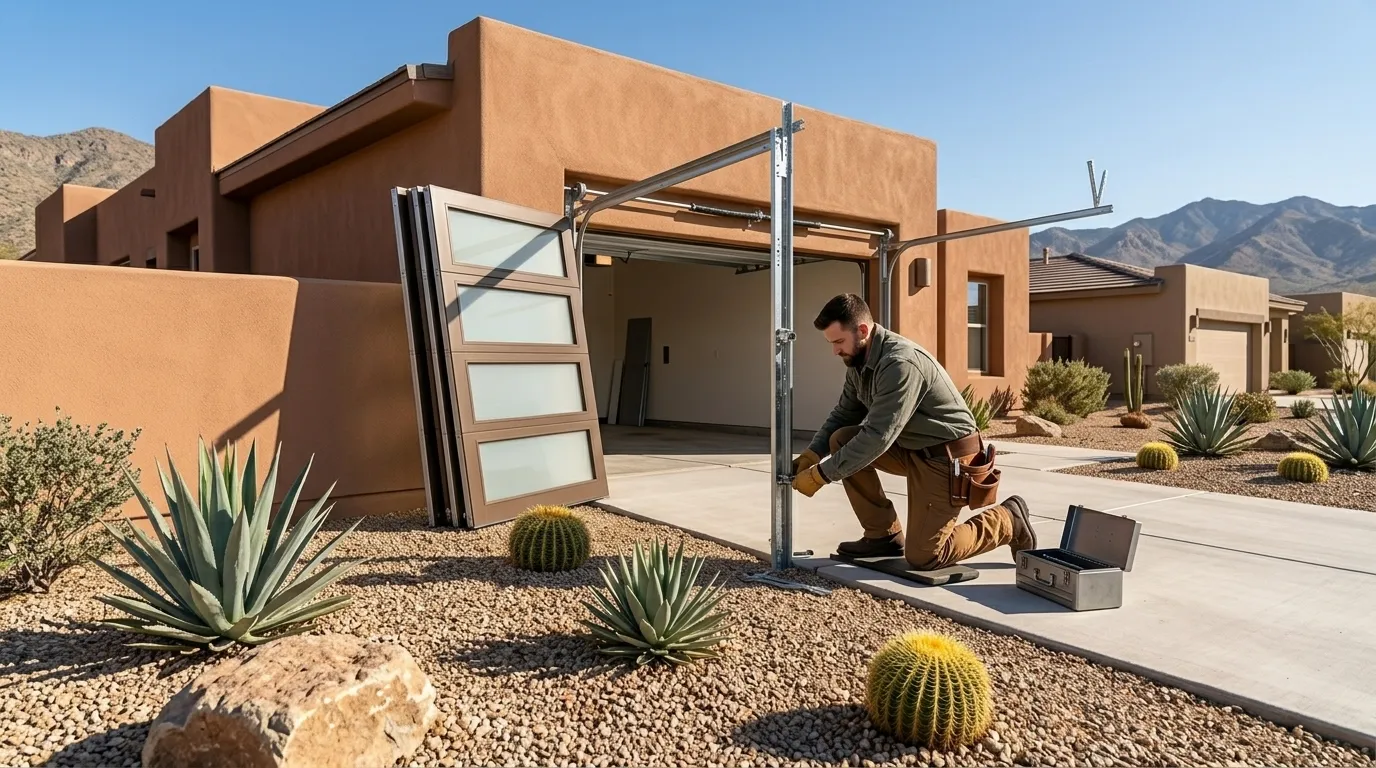
What You Are Seeing
On a door installed around 1967, the signs of age show up in specific places. Steel panels bow slightly at the center where the internal strut has weakened, and you'll see daylight at the bottom corners even with the door fully down. Wood panel doors swell at the stile joints after a wet winter and then don't sit flush once they dry out, so the door looks slightly twisted in its frame from the driveway.
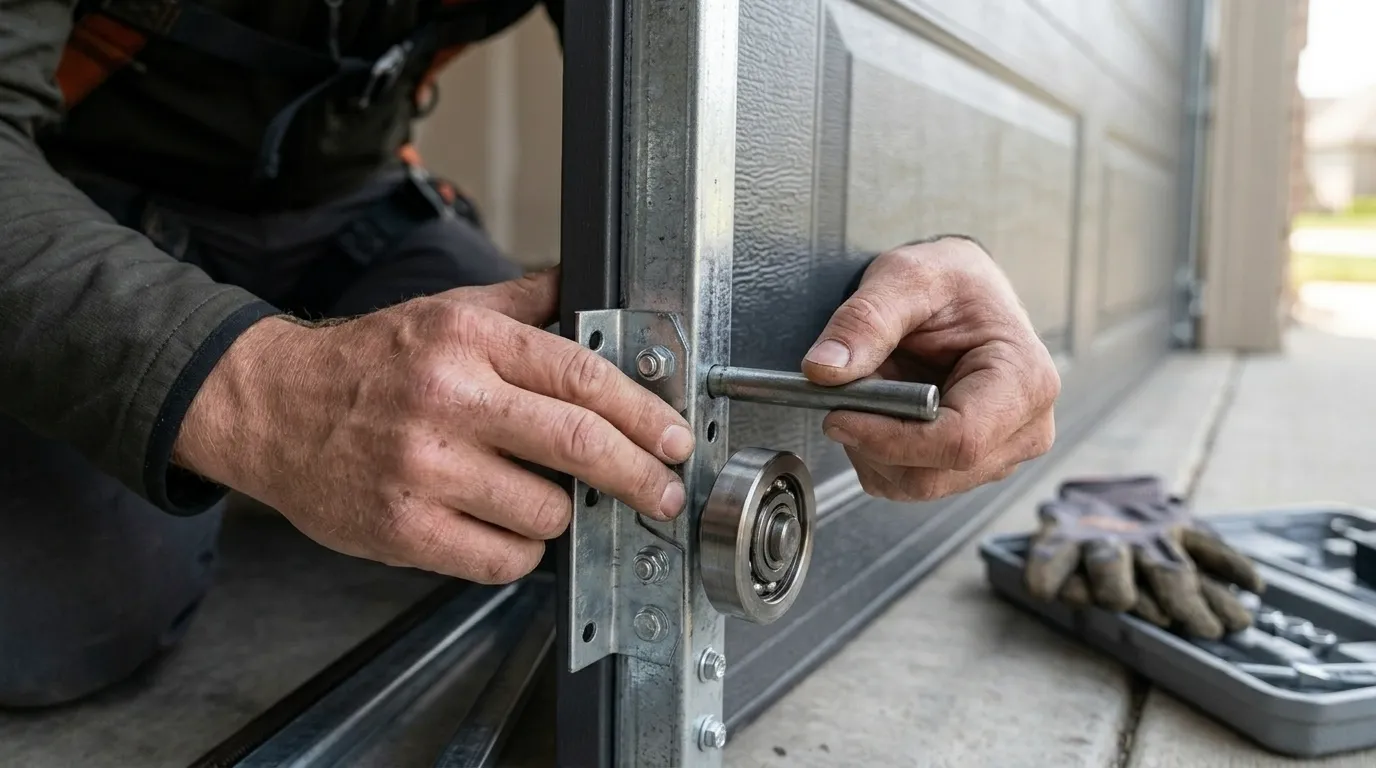
Rollers original to a door this age are usually steel, not nylon, and they've worn an oval groove into the track rather than a round one - that's what you're hearing as a grinding sound on the way up rather than a smooth roll. None of these are reasons to panic, but they are reasons a repair visit often turns into a replacement conversation: a door this old is closer to the end of its service life than the middle of it, and patching a strut or a roller on a fifty-year-old panel buys months, not years.
Talk to a Yorktown Technician First
Describe what the door is doing and get a straight answer on what it likely needs.
Other Garage Door Services in Yorktown
Recent Work in Yorktown
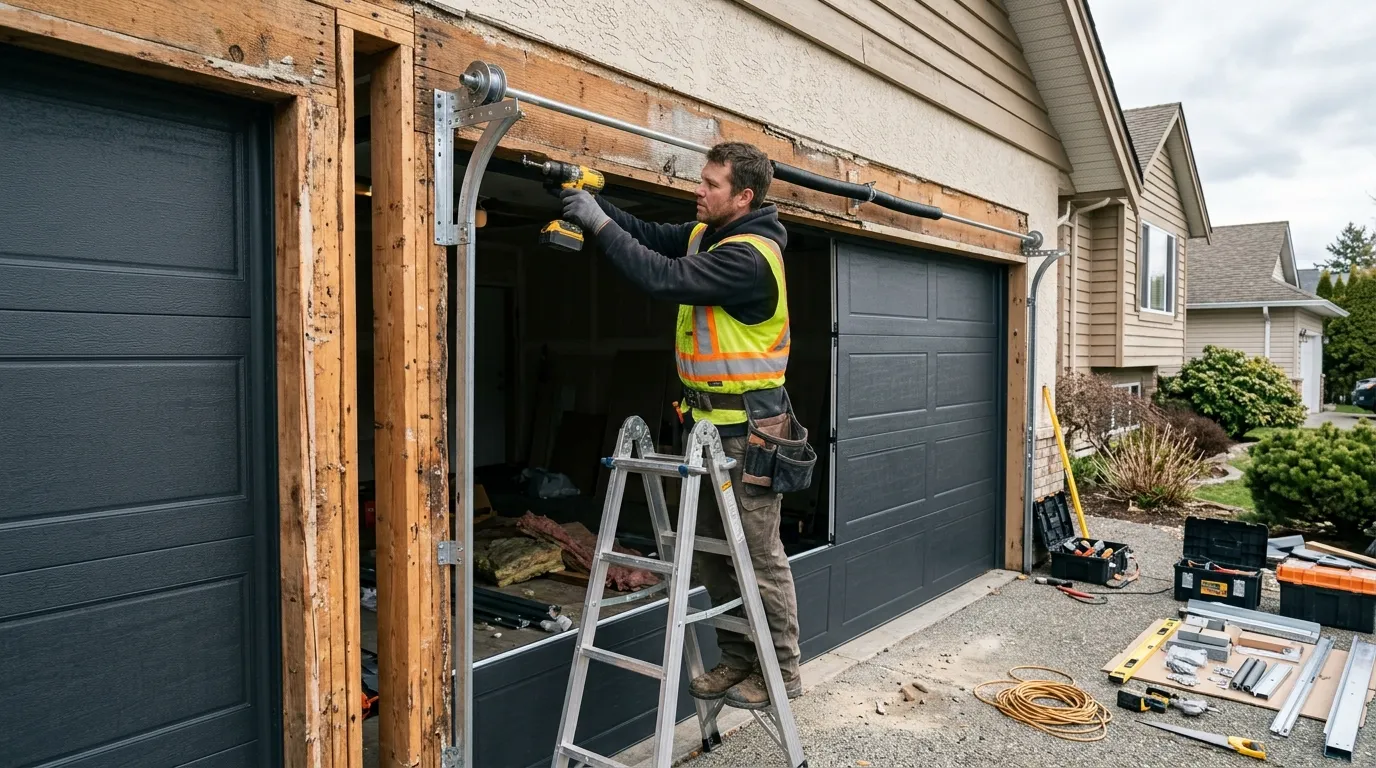
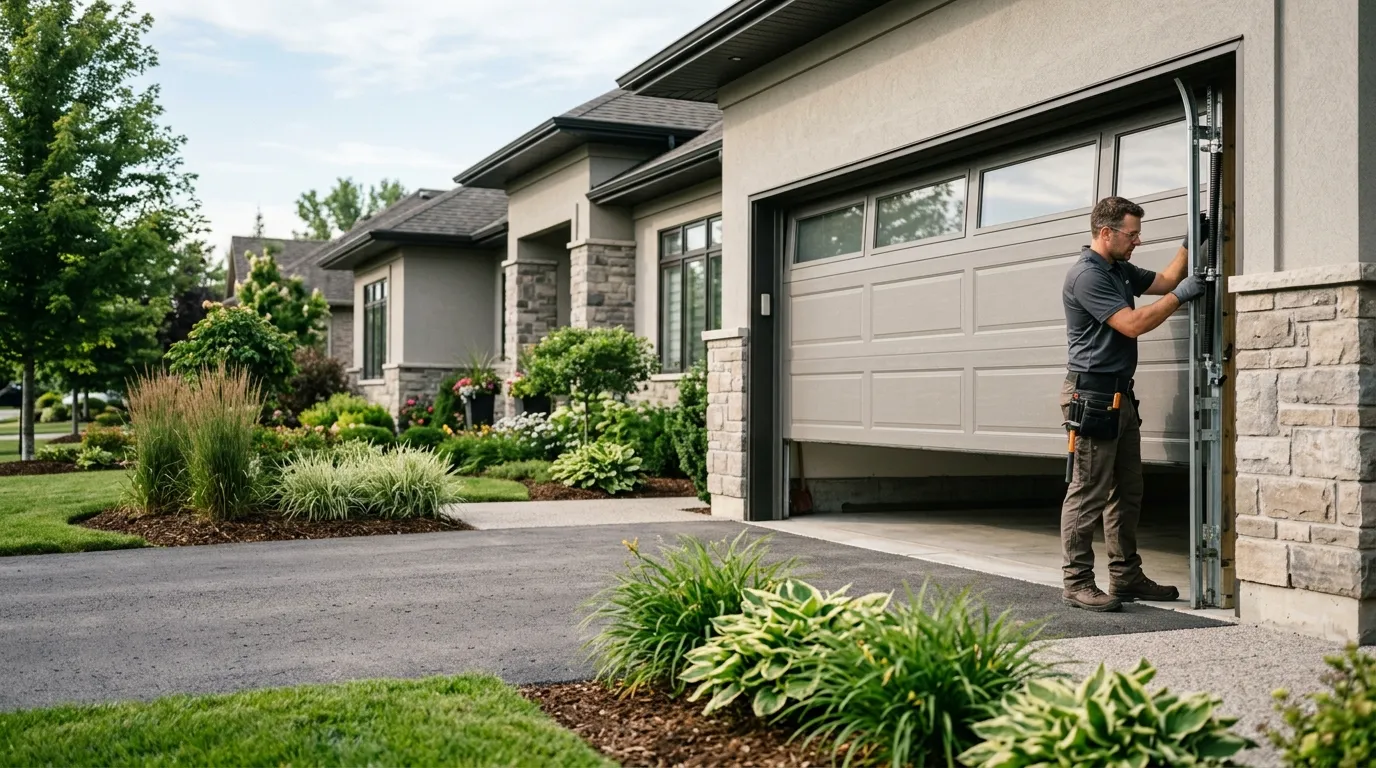
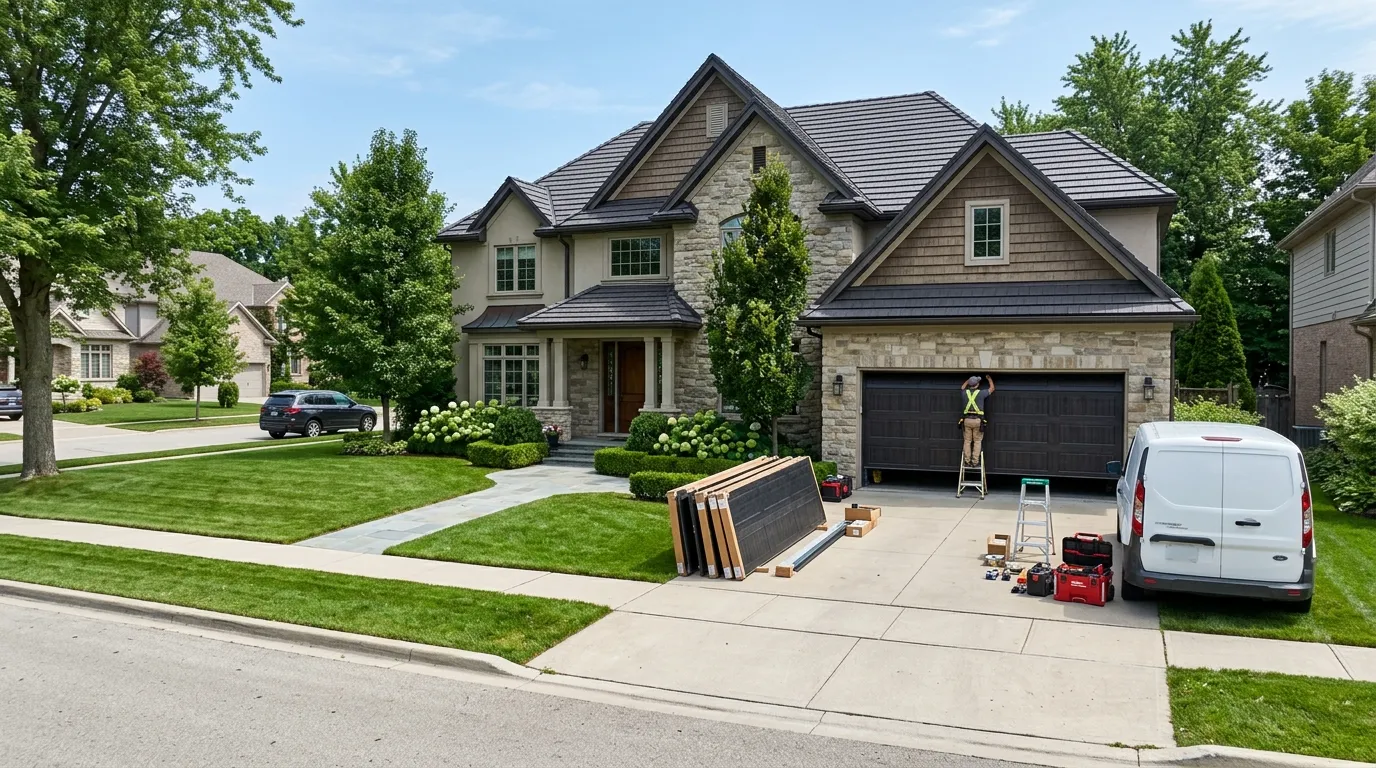
A look at jobs our crew has been on nearby.
Why Yorktown Calls Us
Frequently Asked Questions
How old does a garage door in Yorktown usually get before it needs replacing rather than repair?
Most of what we see on houses from this build era, dated around 1967, is past 50 years old. Steel and wood doors from that period were not built with the thermal breaks or reinforced struts used now, so once the panel itself is bowing or the seams have loosened, a repair holds for months rather than years. At that point replacement is the better spend.
Do you keep a stock of parts in Yorktown?
No. We run out of Williamsburg, about 11 miles away, and bring what a job needs on the truck for each visit. There's no local branch here. Tell us the age and type of door when you call so we can bring the right spring wind and track hardware on the first trip.
Will a standard-size door fit my opening if my house was built in the 1960s?
Often, but not always. Openings framed in that era weren't always cut to today's standard 9-by-7 or 16-by-7 dimensions. We measure on site before quoting rather than assuming a stock size fits, because a mismatch means either shimming badly or ordering a custom width.
How long does a new door install take once it's ordered?
A standard-size steel or insulated door install itself is usually a single visit. If your opening measures out non-standard, which isn't unusual on a house from the 1960s, we order the size to match, and that adds lead time before the install date.
Need New Door Installation in Yorktown?
Call now for straight answers on cost and timing.