
Service
Garage Door Roller Replacement Around Williamsburg
Rollers failing on a house built in the 1960s or 70s? See why Williamsburg's housing stock and cold winters wear out garage door rollers early, and what the fix costs.
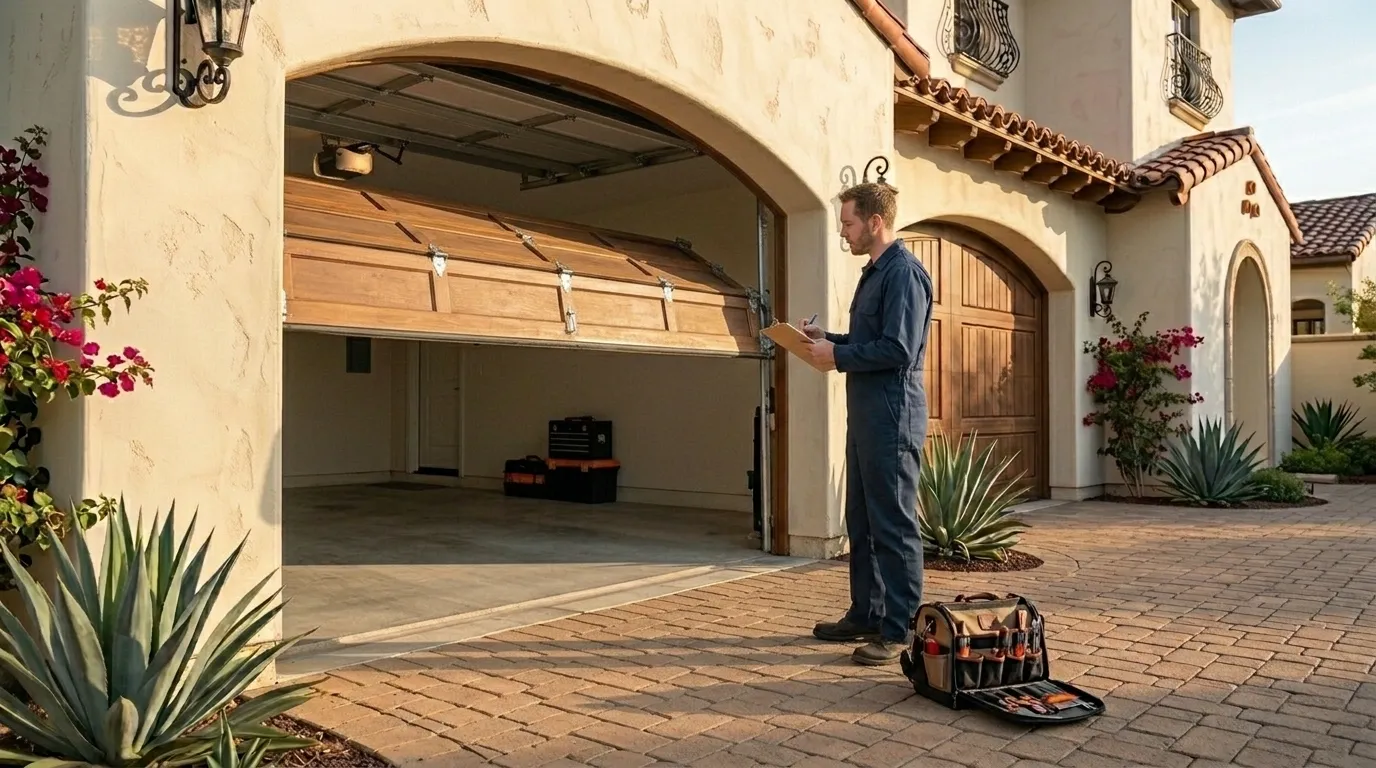
What Happens When You Call
-
1
Call or Request a Quote
Tell us what the door is doing and roughly how old the house is - that alone points us toward the likely part before a truck leaves.
-
2
On-Site Diagnosis
A tech checks the spring, cables, tracks, and opener in person and tells you plainly what is actually wrong.
-
3
Straight Price, No Surprises
You get a number before any work starts. It covers parts and labor, nothing added after the fact.
-
4
Fixed the Same Visit
Most repairs are done in one trip. If a part needs sourcing, we tell you that upfront instead of guessing.
What You Are Seeing
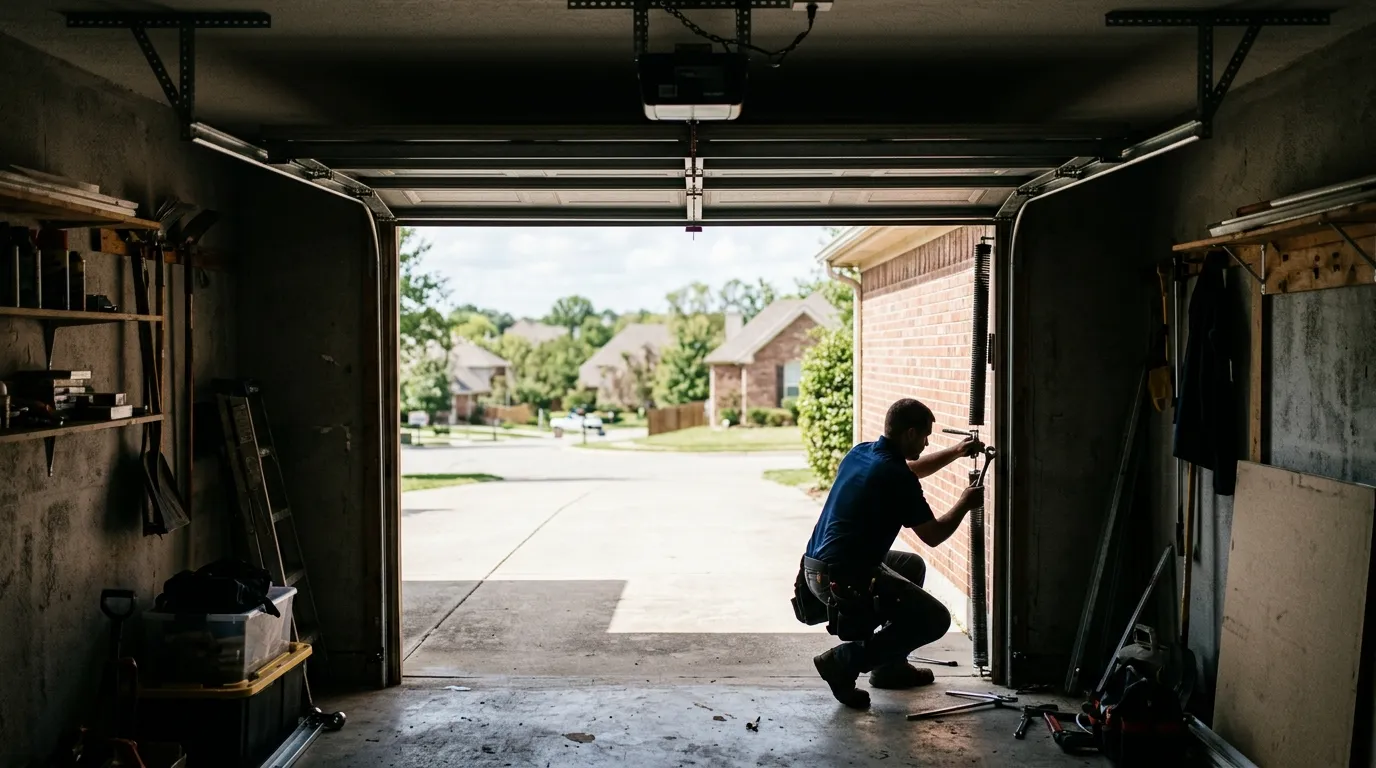
The door catches on the way up, or it jerks at one spot in the track every single time. Sometimes you hear it before you see it - a grinding or a clunk as the door passes a certain point on the track, then it clears and moves on. Look at the rollers themselves and you'll often find flat spots worn into the wheel, a cracked nylon sheath, or a roller that's gone loose and wobbly on its stem.
On older steel rollers you might see rust pitting where the bearing meets the shaft. None of this is an opener problem. The opener is doing its job; it's just fighting a track that no longer runs smooth, and it will eventually strain the drive gear trying to push a door that's binding.
If you catch it at the roller stage, it's a contained job. If you wait, you're looking at a bent track or a stressed cable too.
Why It Happens Here
A lot of the housing across this service area went up between 1948 and 1983, with the bulk of it dating to the 1960s and 70s, and most of those garages still carry the original steel track geometry even where the door itself has been swapped once already. Steel rollers on that older hardware don't flex the way sealed nylon rollers do, so they take the full shock of every open-and-close cycle straight into the bearing and stem. Add a moderate cold climate where temperatures swing enough to stiffen grease and shrink metal tolerances overnight, and you get faster wear at the roller-to-track contact point than you'd see somewhere warmer.
This isn't a defect in any one house - it's a pattern that shows up across the 3,041 owner-occupied houses in the wider area, because so many of them share the same builder-era track and the same winter stress on that track. Newer nylon rollers handle the cold swing better, which is usually the first upgrade worth making.
What the Fix Involves
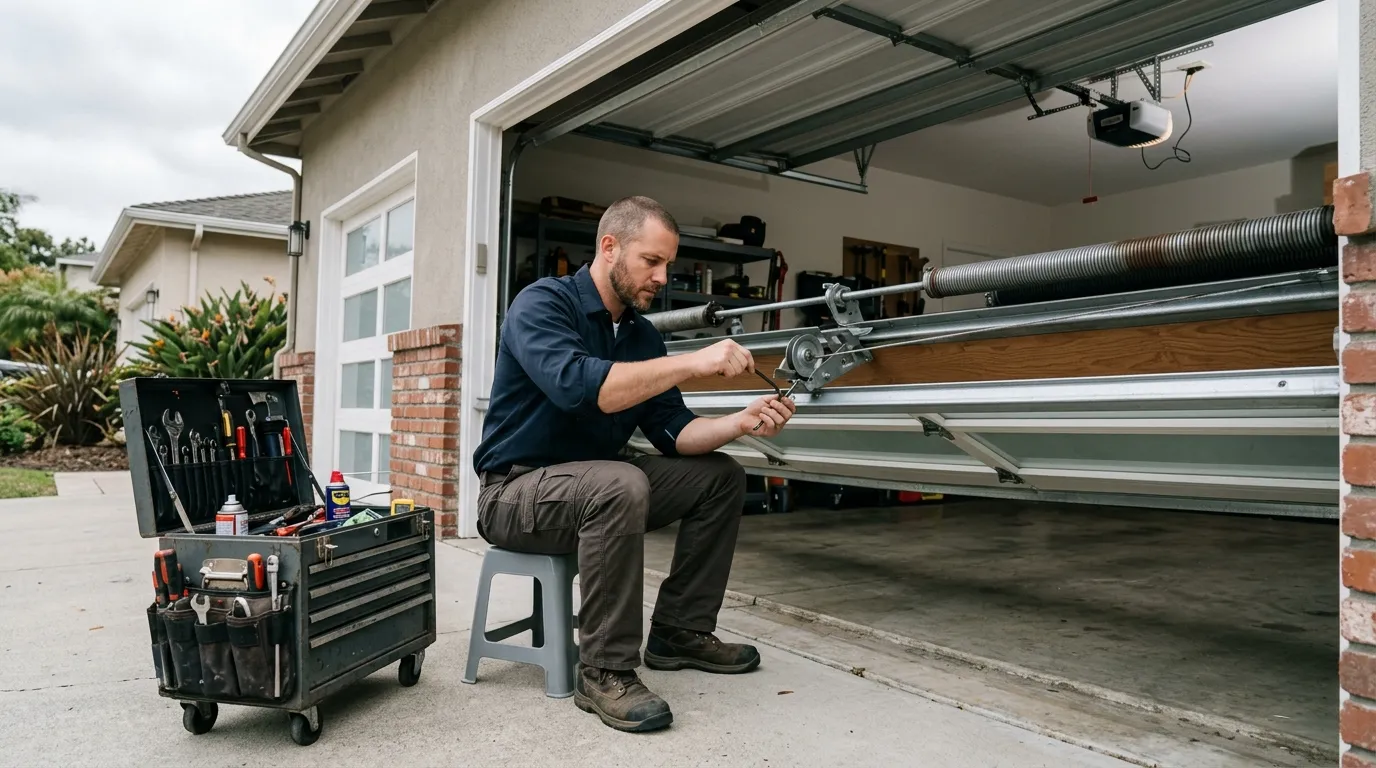
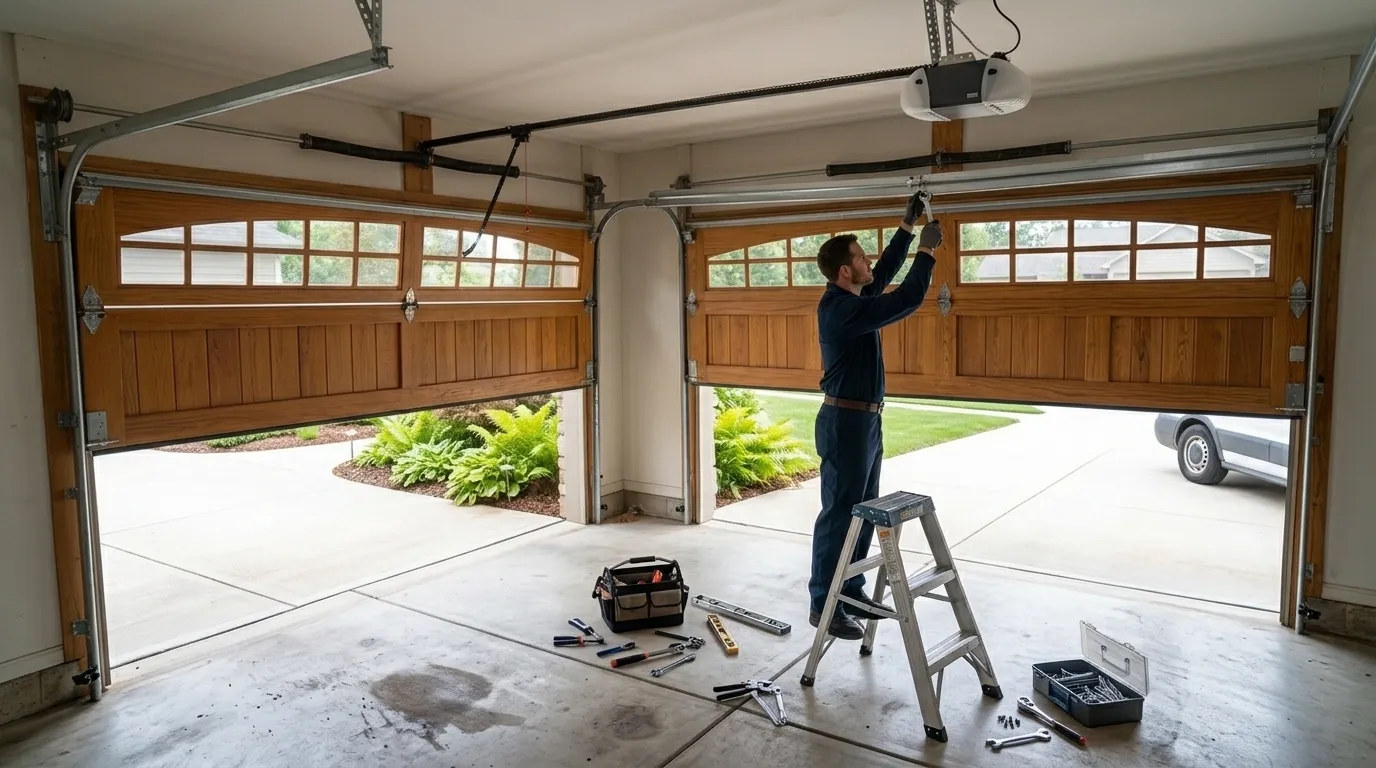
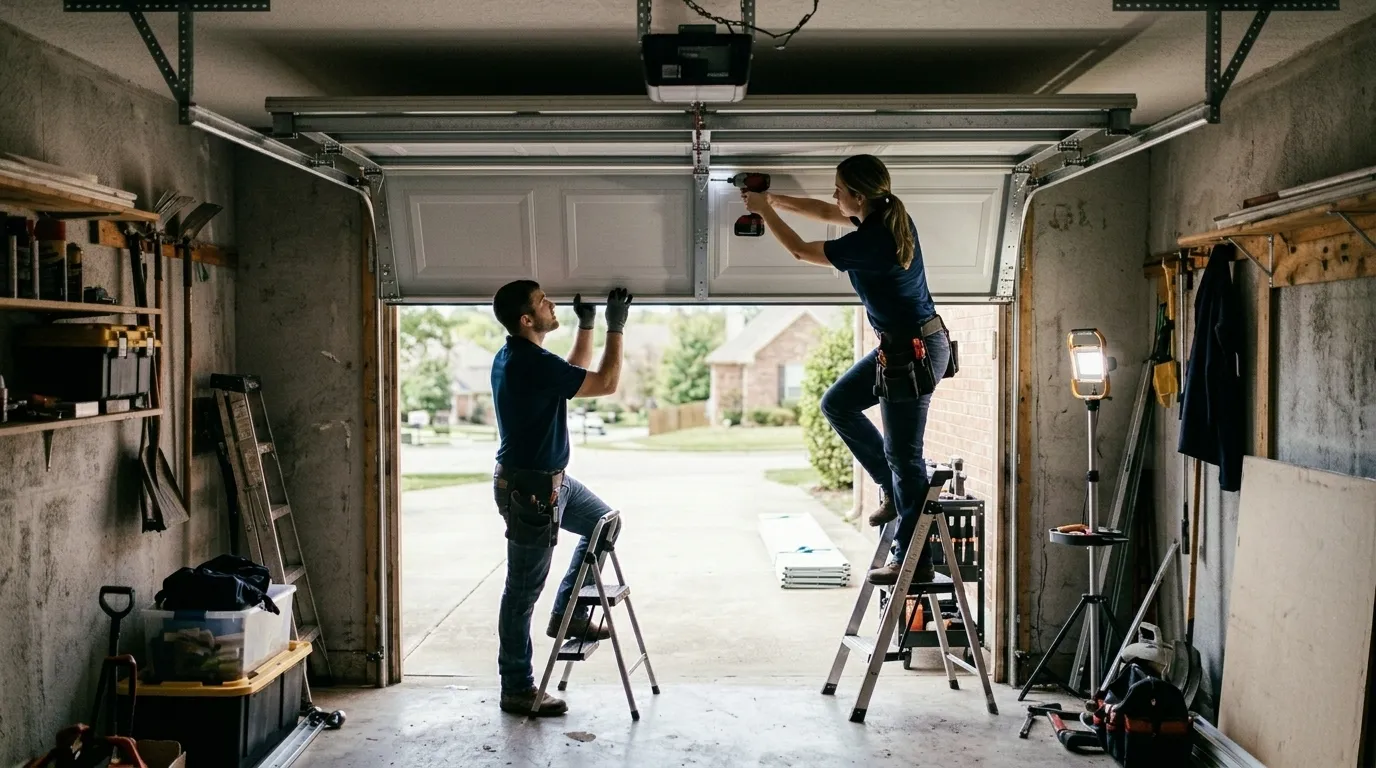
We pull the door, check every roller stem and bracket, not just the noisy one - if one roller's worn, the ones beside it usually aren't far behind. Bad rollers get swapped for sealed nylon units with better bearings, matched to your track gauge, since older 1960s-70s track can run a slightly different width than what's sold off the shelf today. While the door's apart we check the track alignment at the same time, because a worn roller and a track that's drifted out of plumb often show up together, and replacing the roller without fixing the track just wears out the new roller the same way.
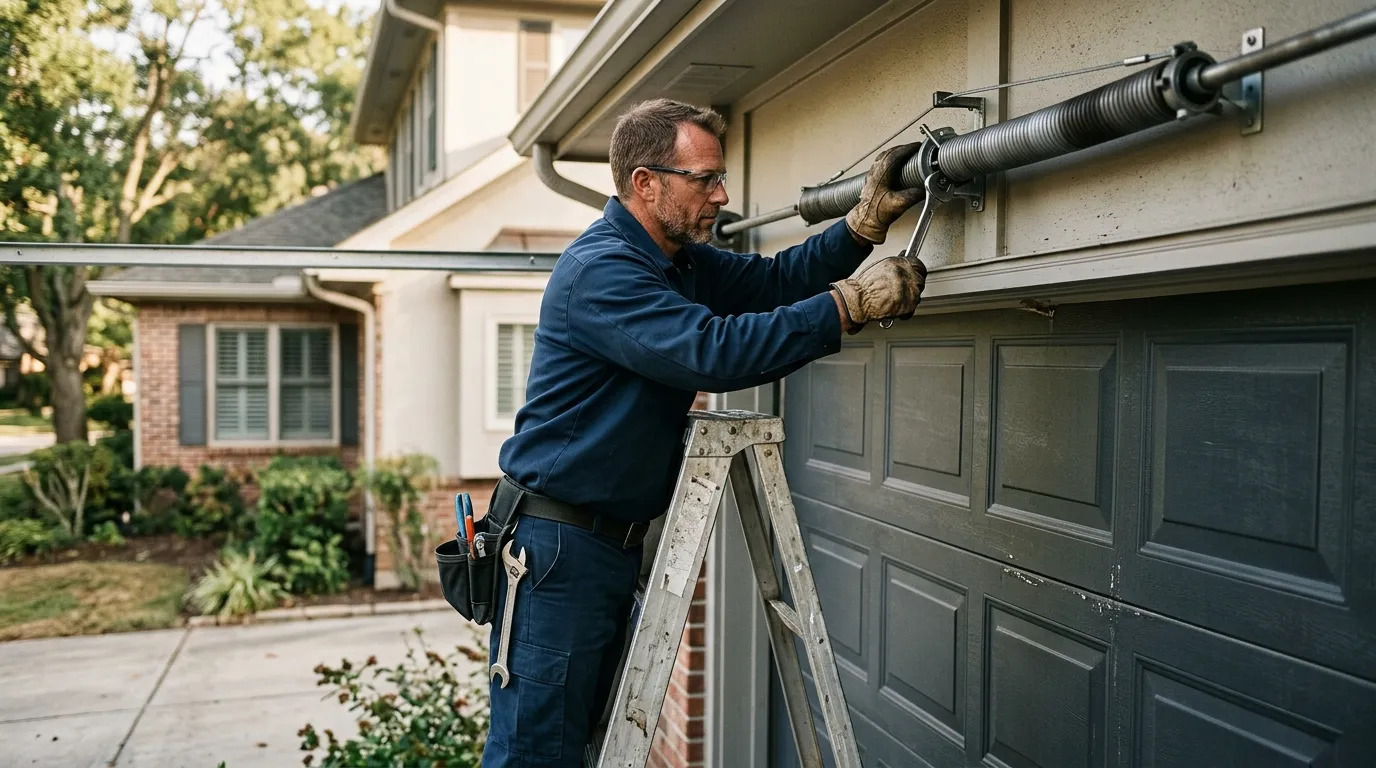
We also check the cables and hinges near that section, since a roller that's been grinding for months can chew a groove into a hinge or fray a cable strand nearby. If the track itself is bent, that's a separate repair - rollers won't fix a bent rail, and swapping them onto a bad track is a waste of your money.
The Cost of This Job
We don't post a flat number here because roller jobs vary more than people expect - a two-roller swap on an otherwise healthy door is a different job than replacing a full set across a double-wide door with a bent section of track thrown in. What we can tell you is what drives the cost: how many rollers are actually bad, whether the track needs realignment, and whether you want standard nylon rollers or a heavier-duty sealed-bearing roller built for repeated cold-weather cycling.
Given the age of a lot of the housing stock in this area, we usually find more than one roller worth replacing once we're already in there, so a full set is often the more sensible spend than doing them two at a time. Ask for a number on your specific door - we'll look at the track and the rollers together before quoting, because guessing at one without seeing the other isn't a real estimate.
Talk to a Technician Before You Book
Describe what the door is doing and get a straight answer on what it likely needs.
Jobs Like Yours
Recent work from this service line.
Why Williamsburg Calls Us
Frequently Asked Questions
How do I know it's the rollers and not the opener?
If the door jerks or grinds at the same spot on the track every time, that's a roller or track issue, not the opener. An opener problem usually shows up as the door not moving at all, reversing unexpectedly, or the motor straining the whole way, not just at one point in the travel.
Why do rollers seem to fail faster in winter here?
Cold stiffens the grease in the bearing and shrinks metal tolerances slightly, so a roller that's already worn grinds harder against the track in cold weather than it would in summer. It's not that cold causes the wear - it exposes wear that's already there.
Can I just replace one roller instead of the whole set?
You can, and sometimes that's the right call if the rest are in good shape. But on older track from the 1960s-70s era, if one roller's worn from age and cycles, the others usually aren't far behind, so we'll check the full set before recommending a partial fix.
Does a bad roller mean I need a new track?
Not usually. Most roller wear doesn't damage the track itself. But a roller that's been grinding for a long time can wear a groove into the track rail, and at that point the track needs attention too - we check both before quoting the job.
Need Garage Door Roller Replacement Around Williamsburg?
Call now for straight answers on cost and timing.